Skip to content
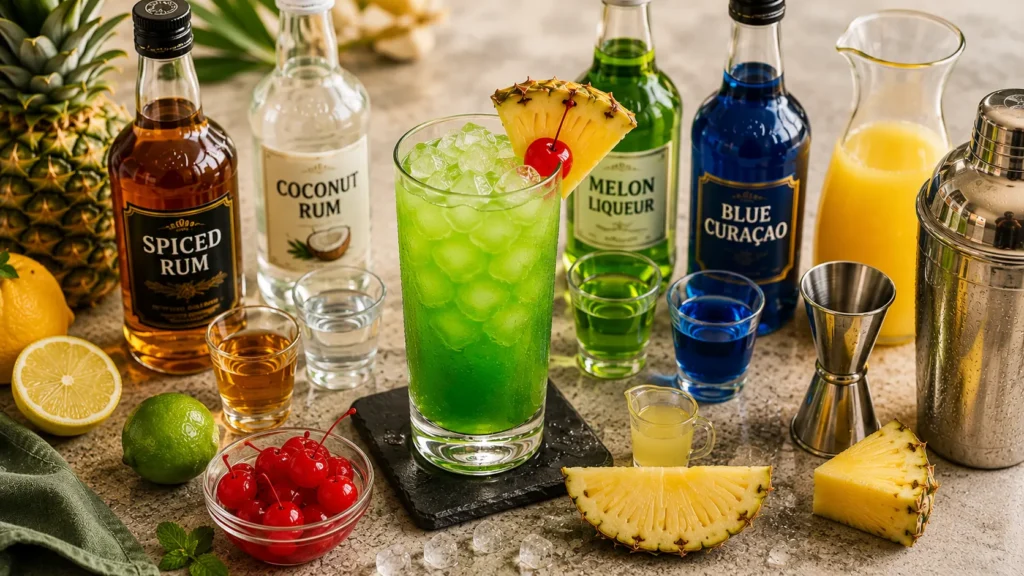
When I look at the Liquid Marijuana cocktail ingredients, I see a simple mix of spirits, liqueurs, fruit juice, and a sour mixer. A common version combines spiced rum, coconut rum, melon liqueur, blue curaçao, pineapple juice, and sweet-and-sour mix.
Despite the name, the classic cocktail does not contain marijuana or cannabis. Its green color comes from the combination of colored cocktail ingredients.
I also want to point out that there is no single fixed recipe for this drink. Published versions use different amounts of pineapple juice, sour mix, and spirits. So, in this guide, I focus on the ingredients commonly found in the drink, what each one adds, and what I would use as a practical substitute when needed.
Liquid Marijuana Cocktail Ingredients at a Glance

When I break the drink down, these are the main ingredients I would expect to see in a common version:
| Ingredient | Typical amount | What it adds |
| Spiced rum | ½ oz | Warm rum and spice notes |
| Coconut rum | ½ oz | Coconut sweetness |
| Melon liqueur | ½ oz | Sweet melon flavor and green color |
| Blue curaçao | ½ oz | Citrus flavor and blue color |
| Pineapple juice | 2 oz | Tropical fruit flavor |
| Sweet-and-sour mix | ½ oz | Sweetness and tartness |
| Ice | As needed | Chilling and dilution |
| Pineapple or cherry | Optional | Garnish |
I would not treat these measurements as the only correct formula. Different published recipes use different ratios. A common approach is to use equal ½-ounce portions of the four alcoholic ingredients, followed by pineapple juice and sweet-and-sour mix. Other versions use considerably more pineapple juice.
If you are looking for the actual preparation method, I would keep that on the main Liquid Maria Juana drink recipe page rather than repeating all the steps here.
1. Spiced Rum
I use spiced rum as the ingredient that gives this cocktail its warm rum character.
Spiced rum can bring notes of vanilla, caramel, and baking spices. These flavors work well with pineapple and coconut because they give the fruity drink a warmer base.
A common version uses ½ ounce of spiced rum.
I would not spend a lot on an expensive bottle for this cocktail. Several other strong flavors are present, so a standard spiced rum is usually a practical choice.
Can You Substitute Spiced Rum?
Yes. I can replace it with regular rum if that is what I have available.
The main difference is flavor. White rum gives the cocktail a cleaner rum character without the extra spice notes.
Dark rum can also work, but I would expect a deeper flavor and potentially a darker finished drink.
2. Coconut Rum
Coconut rum is the ingredient I look to for the drink’s tropical coconut character.
It helps move the cocktail away from a basic fruit-and-rum drink and gives it a sweeter tropical profile.
A common version uses ½ ounce of coconut rum.
I also keep in mind that coconut rum is usually sweet, so it contributes to the overall sweetness along with the melon liqueur and pineapple juice.
Can You Substitute Coconut Rum?

Yes. I can use regular rum if I do not have coconut rum, but the cocktail will lose some of its coconut flavor.
Another option is regular rum combined with a small amount of coconut syrup or coconut flavoring. I would use this carefully because the added syrup can make the drink much sweeter.
3. Melon Liqueur or Midori
Melon liqueur gives the cocktail its sweet melon flavor and helps create its green appearance.
Midori is a well-known brand of melon liqueur, which is why I often see Midori listed directly in Liquid Marijuana recipes.
A typical version uses ½ ounce.
The melon flavor adds another fruit layer alongside the pineapple and coconut. I find this ingredient especially important for keeping the drink close to its familiar flavor and appearance.
Can You Substitute Melon Liqueur?
Yes. I would use another melon liqueur as the closest replacement.
Some versions use green apple liqueur or apple schnapps instead. That changes the drink from a melon-focused cocktail to one with a sharper apple flavor, so I would treat that as a variation rather than a direct replacement.
If I want the familiar flavor, I would stick with melon liqueur.
4. Blue Curaçao
Blue curaçao is an orange-flavored liqueur with a strong blue color.
I see it playing two roles in this cocktail. It adds citrus flavor and also helps create the final green appearance when it mixes with the melon liqueur.
A common version uses ½ ounce.
The citrus note helps balance some of the sweetness from the coconut rum, melon liqueur, and pineapple juice.
Can You Substitute Blue Curaçao?
Yes. I can replace blue curaçao with regular curaçao or another orange liqueur.
The citrus character will remain, but the blue color will be lost. That means the finished cocktail may look quite different.
If I care about keeping the familiar green appearance, I would keep the blue curaçao.
5. Pineapple Juice
Pineapple juice is one of the main mixers I use to give this cocktail its tropical fruit character.
It connects the rum, coconut, melon, and citrus flavors and makes the drink taste more like a tropical cocktail.
A practical single-serving version uses around 2 ounces of pineapple juice, although some published recipes use considerably more.
Fresh or Canned Pineapple Juice?
Both options can work.
If I have fresh pineapple juice available, I can use it for a brighter fruit flavor. Bottled or canned pineapple juice is also convenient and gives me a more consistent result.
I would choose a pineapple juice that tastes good on its own because its flavor is easy to notice in the finished cocktail.
Can I Add More Pineapple Juice?
Yes. I can increase the pineapple juice if I want a fruitier and less concentrated drink.
Adding more juice also reduces the concentration of the alcoholic ingredients in each serving.
I would add it gradually rather than changing the amount dramatically at once.
6. Sweet-and-Sour Mix
Sweet-and-sour mix gives the cocktail both sweetness and acidity.
I consider this ingredient useful because the drink already contains sweet liqueurs and pineapple juice. The sour component helps give those flavors some contrast.
A common version uses around ½ ounce, although the amount varies between recipes.
What Can Replace Sweet-and-Sour Mix?
If I want a fresher option, I can use fresh lemon or lime juice with simple syrup.
The citrus provides acidity while the syrup provides sweetness.
I like this approach because it gives me more control over the final balance. If the drink tastes too sweet, I can increase the citrus slightly. If it tastes too sharp, I can add a little more syrup.
7. Ice
I would not overlook ice when preparing this cocktail.
Ice chills the drink and adds a small amount of water as it melts. That dilution helps soften the concentrated flavors from the spirits and liqueurs.
I recommend using fresh, clean ice.
If I shake the cocktail with ice, I would strain it over fresh ice for serving. This gives me a cold drink without using the same ice that was inside the shaker.
8. Garnishes
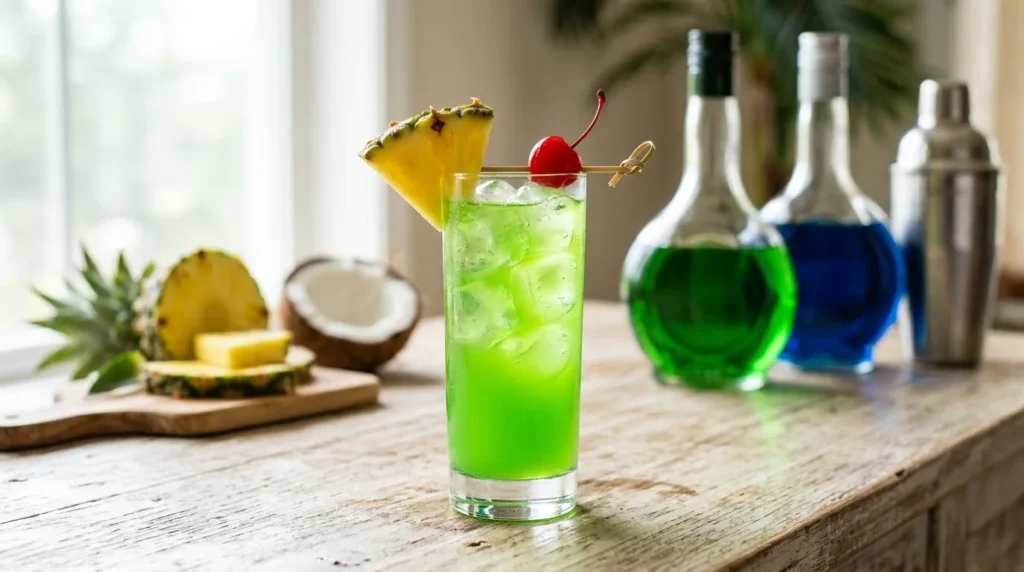
I see the garnish as optional, but pineapple and cherries fit this drink particularly well.
Pineapple Wedge
A pineapple wedge reinforces the tropical theme and gives the glass a fresh appearance.
I would keep the garnish simple because the cocktail already has a strong green color.
Maraschino Cherry
A maraschino cherry adds a bright color contrast and pairs naturally with the pineapple garnish.
I would use one cherry rather than adding several. The goal is to complement the drink rather than cover the glass with decorations.
Why Do These Ingredients Make a Green Cocktail?

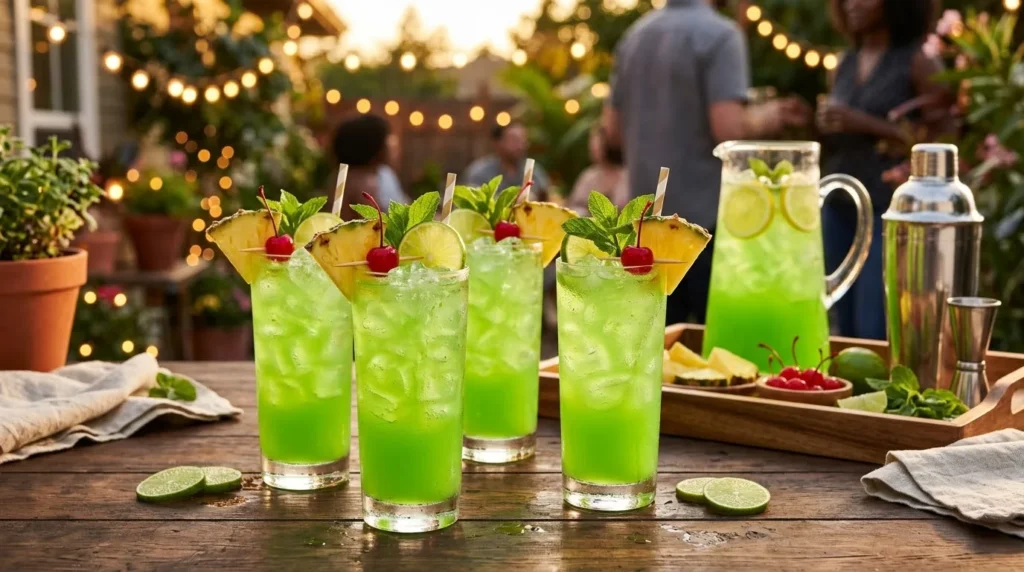
The green color comes from the combination of colored ingredients, not from marijuana or cannabis.
The green melon liqueur contributes green color, while blue curaçao contributes blue. When these colors mix with pineapple juice and the other ingredients, the finished drink can take on a bright green appearance.
I would expect the exact shade to change based on the brands, measurements, and amount of pineapple juice used.
How the Ingredients Work Together
When I break the cocktail down by function, each ingredient has a clear role.
Spiced rum provides the warm alcoholic base.
Coconut rum adds tropical coconut sweetness.
Melon liqueur brings melon flavor and green color.
Blue curaçao adds citrus flavor and blue color.
Pineapple juice supplies the main fruit character.
Sweet-and-sour mix adds sweetness and tartness.
I see the drink as a combination of these flavors rather than a cocktail built around one dominant ingredient. The pineapple, coconut, melon, citrus, and rum work together to create its familiar tropical profile.
How to Adjust the Ingredients to Your Taste
One thing I like about this ingredient combination is that I can make small changes without completely changing the identity of the drink.
If It Is Too Sweet
I would reduce the sweet-and-sour mix slightly and add a small amount of fresh lemon or lime juice.
I can also reduce the amount of coconut rum or melon liqueur if the sweetness is coming mainly from the liqueurs.
If It Is Too Tart
I would add a little more pineapple juice or a small amount of simple syrup.
I recommend making small adjustments rather than adding a large amount at once.
If It Tastes Too Strong
I would add more pineapple juice and serve the drink over fresh ice.
This lowers the concentration of the alcoholic ingredients in each sip.
If It Tastes Too Fruity
I would reduce the pineapple juice slightly while keeping the spirit measurements consistent.
This makes the rum and liqueur flavors more noticeable.
If the Color Is Too Pale
The color depends on the type and amount of melon liqueur and blue curaçao used.
I would not add extra alcohol just to make the cocktail greener because doing so also increases the alcohol and sweetness.
Instead, I would choose melon and blue curaçao products with strong, clear colors.
Common Ingredient Mistakes
Using Too Much Sweet Mixer
The cocktail already contains sweet liqueurs and pineapple juice. I would avoid adding too much sour mix because it can make the drink heavy and overly sweet.
Replacing Every Ingredient at Once
If I change the rum, melon liqueur, blue curaçao, and mixer at the same time, the finished drink can taste very different from the familiar version.
I prefer changing one ingredient at a time when possible.
Adding Alcohol Just to Make the Drink Stronger
The four alcoholic ingredients already provide plenty of spirit character.
I would measure each pour rather than adding extra alcohol simply to make the drink stronger. This keeps the flavor more balanced and makes the serving easier to track.
Choosing Ingredients Only for Color
A bright green drink looks appealing, but I would not choose ingredients based on color alone.
The flavor still needs to work. Pineapple, coconut, melon, citrus, and rum should remain balanced.
Can You Make a Liquid Marijuana Cocktail Without Alcohol?

Yes. I can create a mocktail variation, although it should not be confused with the classic alcoholic cocktail.
For a non-alcoholic version, I can use pineapple juice, coconut flavors, citrus, and green or blue cocktail syrups.
Non-alcoholic blue curaçao syrup can provide citrus flavor and color, while coconut syrup can provide the coconut note.
I would use syrups carefully because they can make the finished drink much sweeter than the alcoholic version.
Final Ingredient Checklist

If I am gathering everything before making the drink, this is the checklist I would use:
- Spiced rum
- Coconut rum
- Melon liqueur or Midori
- Blue curaçao
- Pineapple juice
- Sweet-and-sour mix
- Ice
- Pineapple or cherry for garnish
The key is balance. Spiced rum gives the drink its warm base, coconut rum adds tropical sweetness, melon liqueur brings melon flavor and green color, and blue curaçao adds citrus and color.
Pineapple juice supplies the main tropical fruit note, while sweet-and-sour mix adds the sweet and tart contrast.
Because published versions use different ratios, I would treat the ingredient amounts as a starting point rather than claiming there is one official formula. Small changes to the pineapple juice and sour component can make the drink sweeter, fruitier, or more tart without changing its basic character.
Frequently Asked Questions About Liquid Marijuana Cocktail Ingredients
What are the main ingredients in a Liquid Marijuana cocktail?
The common ingredients are spiced rum, coconut rum, melon liqueur such as Midori, blue curaçao, pineapple juice, and sweet-and-sour mix.
Does Liquid Marijuana cocktail contain marijuana?
No. The classic cocktail does not contain marijuana or cannabis. I treat the name as a cocktail name rather than an indication of a cannabis ingredient.
Is Midori required for a Liquid Marijuana cocktail?
No. I can use another melon liqueur instead. The flavor and color may change depending on the product.
Can I use regular rum instead of coconut rum?
Yes. Regular rum works as a substitute, but I would expect less coconut flavor in the finished cocktail.
What does blue curaçao add to the drink?
Blue curaçao adds orange-citrus flavor and blue color. Its color helps create the familiar green appearance when combined with melon liqueur and the other ingredients.
Can I use fresh pineapple juice?
Yes. I can use fresh pineapple juice instead of packaged pineapple juice. It may provide a brighter fruit flavor.
What can I use instead of sweet-and-sour mix?
I would use fresh lemon or lime juice combined with simple syrup. This gives me better control over the sweet and tart balance.
Why is my Liquid Marijuana cocktail not green?
The final color depends on the type and amount of melon liqueur, blue curaçao, pineapple juice, and other ingredients.
I would not add extra alcohol just to change the color. It is better to choose appropriately colored ingredients and keep the recipe balanced.