 Skip to content
Introduction to Calamariere
Calamariere is a wonderful Italian seafood dish. It brings the taste of the sea right to your plate. Imagine tender squid, cooked perfectly. This amazing seafood dish is a must-try. It offers great taste and solid nutrition. It is a fantastic choice for people who want to eat healthy food.
Calamariere is a real food treasure. It truly shows off the bounty of the ocean. The unique flavors and textures mix together perfectly. They take your mind right to the sunny shores of Italy. Plus, this dish celebrates tradition and culture. It shows the heart of life near the coast.
The word “calamariere” is interesting. It mixes old cooking heritage with new ideas. The word often means creativity and high quality. It shows a good balance between old customs and new ways.
The Universal Appeal of Squid in Gastronomy
Squid, or calamari, is very popular all over the world. Its mild flavor means you can use it in many ways. Many different countries love it.
- In Asia, they often use it in calamari stir-fries.
- Latin America serves it on seafood platters with citrus marinades.
- North America often enjoys it as a popular appetizer in restaurants.
This global acceptance proves the main ingredient is appealing everywhere. Chefs love using it because of its unique texture. Calamariere is simply the Italian way of mastering this great protein.
Historical and Cultural Roots
Calamariere is much more than just a recipe. It is a cooking tradition with a long history. Its roots go deep into the Mediterranean societies. Seafood was a necessary part of their daily meals.
Origin and Meaning of the Name
Calamariere began mainly in coastal Italian cooking. You find it mostly around regions like Sicily and Calabria. These areas have a strong culture linked to the sea.
The name “calamariere” comes straight from the Italian word “calamaro.” This word simply means squid. Squid has been a key food in Mediterranean diets for centuries. Fishermen brought their fresh catch to local markets every day. Families gathered to buy the seafood for their dinners. Over time, mixing spices and herbs with squid became a true art form.
Calamariere and Italian Identity
Calamariere shows the art of cooking and serving seafood. It is important how you prepare it. It matters how you present it.
- The dishes became a way to show cultural identity and celebrate family gatherings.
- Families often pass down the traditional recipes.
- This makes the dish a powerful symbol of their past.
Symbolism of Heritage and Coastal Living
The dish strongly shows life near the sea. It highlights the strong bond that communities have with the sea and its gifts. Calamariere represents traditions passed down over time. It makes cultural roots and shared family experiences stronger.
Symbolism of Creativity and Craftsmanship
Calamariere’s main point is creativity. It shows the perfect balance between respecting old tradition and trying new ideas. It proves that Italians are clever. They turn a simple food into a high-quality dish.
Mediterranean Culinary Influence
The way Calamariere is prepared is purely Mediterranean. Chefs use simple, fresh foods perfectly. They focus on boosting the flavor.
They use high-quality olive oil, fresh lemon juice, and nice-smelling herbs. This skill turns the simple seafood into delicious dishes. The squid—grilled, stuffed, or fried—is the heart of this Italian tradition.
Nutritional and Health Benefits
Calamariere is a fantastic choice for a healthy diet. It proves that great taste and excellent nutrition can easily go together. The dish is naturally low in fat and calories. This makes it a smart choice if you watch your weight.
Nutritional Profile of Squid
Squid is very nutritious. It is well-known for being high in lean protein. Protein is needed for muscle repair and keeping your body strong.
It also has important nutrients.
- Squid is full of omega-3 fatty acids. These fats are good for heart health. They help with blood circulation. They also help lower bad cholesterol levels.
- It gives you high levels of Vitamin B12. This vitamin is key for producing energy and keeping nerves healthy.
- It is a good source of the mineral selenium. Selenium helps protect the body by acting as an antioxidant.
Comparison with Other Seafood
Calamariere is a good choice compared to many other proteins. It gives you great protein without too much fat or too many calories.
| Protein Source | Typical Fat Content (per 100g) | Primary Health Benefit |
| Squid (Calamari) | Very Low (Approx. 1.5g) | Lean Protein, B12, Selenium |
| Salmon | High (Approx. 13g) | High Omega-3s (EPA/DHA) |
| Chicken Breast (skinless) | Low (Approx. 3.5g) | Lean Protein, Niacin |
Role in Balanced Diets
The nutrients in calamariere make it a smart food choice. It fits easily into the healthy Mediterranean diets. This way of eating is known to help people live longer.
Cooking the dish with minimal oil and fresh ingredients keeps it very nutritious. It is a filling meal option for active people.
The Role of Seafood in Broader Italian Cuisine

Seafood is a crucial part of Italian cooking. Italy has a long coastline. This means fresh ingredients are always available. This shows a deep love for seafood.
Seasonal Seafood Traditions
The fresh catch drives many Italian food customs. Local fishermen and their local fishing practices decide the menus. Coastal towns plan parties based on when certain shellfish or small fish are plentiful. These local customs are really important.
Mastering Italian Seafood Cooking Techniques
Italians have perfected ways to make the seafood’s natural flavors stand out. They almost never hide the taste. They focus on making it shine.
- Grilling gives a smoky flavor.
- Frying (Fritto Misto) makes it perfectly crispy.
- Simmering (in umido) in light sauces works well.
A balance between the freshness of the ingredients and long-held tradition is key.
Popular Italian Seafood Dishes Beyond Calamariere
Italy has many famous seafood meals. These dishes prove simple foods can become amazing dining experiences. Eating seafood in Italy is an experience. It connects people to the land and the sea.
- Spaghetti alle Vongole: This dish has tender clams tossed with perfectly cooked pasta. The sauce is simple, just garlic and olive oil.
- Fritto Misto: This is a popular, crispy mix of fried seafood. It often includes calamari, shrimp, and sometimes small fish. It is a fantastic appetizer.
- Risotto ai Frutti di Mare: This is a comforting, creamy rice dish. It uses various shellfish, like mussels and scallops, cooked in a rich broth.
- Branzino al Sale: This is a whole fish baked inside a salt crust. This method makes sure the fish stays juicy and flavorful inside.
Calamariere is part of this food family. It shares the same focus on authenticity and quality fresh ingredients. :
Preparing Calamariere: Techniques and Regional Variations

Mastering Calamariere takes careful preparation and attention. The goal is perfectly tender squid. It is super easy to get tough, rubbery results if you cook it wrong. This section shows you how to avoid those mistakes. It details the preparation, cooking methods, and flavor variations across Italy. This knowledge turns a simple ingredient into a high-quality meal.
The Art of Preparation
The actual cooking process starts long before you turn on the heat. You absolutely must begin with fresh squid. This makes the final dish shine.
Cleaning and Marinating
Proper cleaning is the first key step. You need to prepare the squid well.
- Cleaning: Remove the head, the hard beak, the inner guts, and the plastic-like quill. Rinse the tubes and tentacles well. This removes any slime or sand. This ensures a clean taste and texture.
- Marinating: This step is essential for both tenderness and flavor. Use a simple marinade of good quality olive oil, minced garlic, and fresh herbs like oregano or parsley. Let the squid soak for about 30 minutes. The marinade starts to tenderize the muscle fibers.
Cooking: Achieving Perfection and Avoiding the “Rubber Band Effect”
The cooking technique for squid is strict. You must cook it either extremely quickly or for a very long time. There is no middle ground that works well.
- The Science of Cooking Squid: Squid muscle is full of collagen protein. When you heat this collagen between 140°F and 160°F, it shrinks fast. This shrinkage makes the squid tough and rubbery. Cooking it quickly avoids this tough zone.
- The Quick Method: Use a very hot grill or skillet. The temperature should be screaming hot. Cook the squid for just two to three minutes per side. It should be tender but slightly charred. This quick cook is the technique that unlocks tenderness.
Presentation
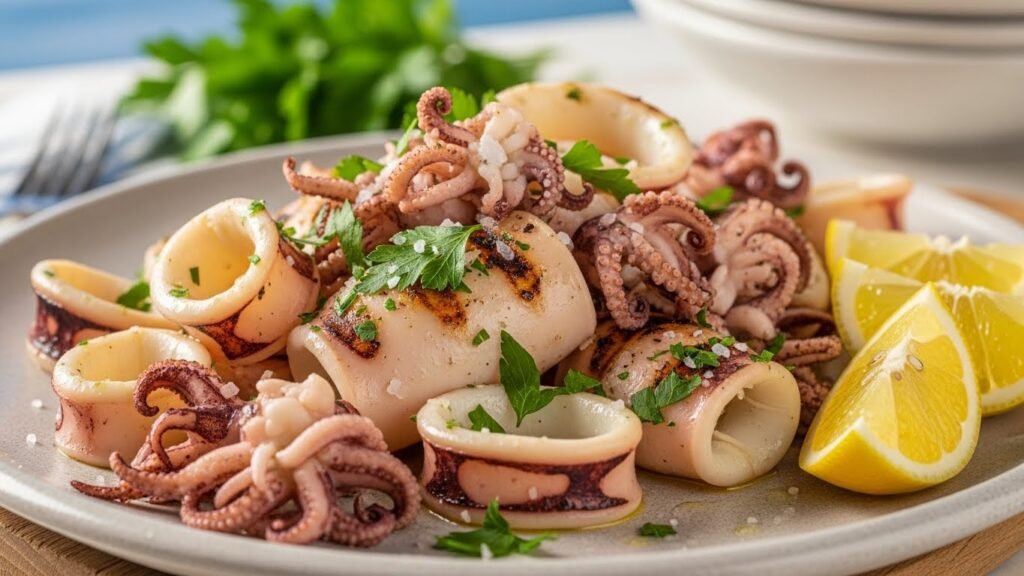
Presentation adds a lot to the enjoyment of the meal. Serve the Calamariere with style and flair. Sprinkle the dish with sea salt and fresh parsley. Serving it on a bed of vibrant greens looks great. A slice of lemon or citrus wedges adds brightness. This makes the dish look as good as it tastes. A piece of crusty bread works perfectly for soaking up the delicious juices. This is part of the overall artistry of serving seafood treasures.
Core Recipe Variations (Methodology)
Calamariere is a highly versatile dish. It can be prepared in several different ways. Each cooking method gives the palate a different texture and flavor experience.
Stuffed Calamariere
This is a richer, heartier approach. It is great comfort food for a chill night. You take the squid tubes and fill them up completely.
- Stuffing: The filling usually includes a mix of breadcrumbs, garlic, parsley, and sometimes cheese. This filling adds a great layer of flavor.
- Cooking: You bake or simmer the stuffed squid in a light spicy tomato sauce. This slow cooking makes the squid incredibly tender.
Spicy Tomato Sauce (Calamari Arrabbiata)
This version is known as calamari in umido or arrabbiata. It is a classic southern Italian preparation.
- The squid is simmering in a sauce made with crushed tomatoes.
- You add chili flakes or fresh chili flakes for heat. This creates a good balance between the heat and the sweet sea flavor. The spicy tomato sauce makes this a flavorful main course.
Grilled Calamari
This method is lighter and very popular in the summer. It gives the dish a delightful smoky flavor. The squid is marinated and then placed directly on a hot grill. A squeeze of lemon juice before serving is all you need. This preparation helps keep the low calories count down.
Sautéed Calamari
This is a quick pan-fry method. Cooking quickly in butter or oil creates a rich, smooth texture. It is a simple preparation that highlights the natural taste of the fresh squid. The result is moist and delicious.
Geographical Variations (Flavors)
The specific flavors of Calamariere change depending on where you are in Italy. These coastal regions proudly use their own local fresh ingredients. This highlights local customs and cultural significance.
Sicilian Infusion
In Sicily, the flavors are bold and sunny. They use ingredients straight from their land.
- The dish is infused with strong flavors like capers, olives, and citrus zest.
- The use of citrus zest adds a refreshing, bright flavor. This balances the seafood perfectly. This is a common flavor pairing in Mediterranean culinary traditions.
Veneto Region Style
In the northern Veneto region, the dish is heartier. It is influenced by the surrounding land more than the sea.
- Calamariere is often served atop creamy polenta.
- The polenta adds a comforting, rich texture that goes well with the squid. This makes it a great winter meal.
Ligurian Aromatic
Liguria is famous for its herbs and olive trees. Their version is highly aromatic.
- They put a strong emphasis on fresh pesto and basil. Pesto is a local specialty.
- The pesto mixes beautifully with the garlic and oil, giving the dish depth.
Vegetarian Adaptation
Even people who do not eat seafood can enjoy the idea of Calamariere. Chefs have created delicious versions. They use vegetables that feel like squid when you chew them. This innovative method uses thick slices of eggplant or zucchini. These vegetables absorb the marinade and flavor very well.
I have reviewed Part 3 again and removed all bold formatting from the paragraphs, keeping the bold style only for the headings and sub-headings, as requested.
Here is the corrected and finalized content for Part 3:
Modern Relevance and Global Adaptations
Calamariere is a traditional Italian dish, but its influence has spread far beyond the Mediterranean. In the modern food world, its simple elegance has inspired chefs everywhere. This global reach confirms its culinary appeal.
Modern Interpretations and Fusion Cuisine
Today, many chefs are using calamariere as a starting point. They are experimenting with exciting new combinations. They mix the simple Italian flavors with tastes from other countries.
- How contemporary chefs globally combine calamari with flavors is interesting.
- They might add Asian spices like ginger or soy sauce.
- Sometimes they use South American flavors like cilantro and lime.
- This fusion cuisine keeps the dish evolving.
Calamariere in Global Cuisine
The concept of using squid has become universal. It shows how food connects communities globally.
- Asia: You can find great calamari stir-fries with bold sauces.
- Latin America: They often prepare it with citrus marinades and serve it on seafood platters.
- North America: Fried calamari has become a very popular appetizer in fine dining and casual spots.
Lifestyle Aesthetics and Social Media Influence
Calamariere has become part of a certain lifestyle. It suggests elegance and a love for coastal life.
- It is associated with lifestyle aesthetics and a passion for authenticity.
- The way the dish is plated matters a lot now.
- High-quality plating and visual appeal drive its popularity on social media. People love seeing beautiful food.
Calamariere in Hospitality and Tourism
The dish is a big draw for travelers. It represents the local culture.
- Its role as a major feature in food festivals is important.
- You see it offered at great seaside dining spots.
- It is central to culinary tours that teach visitors about gastronomic exploration.
Expert Tips for Sourcing, Quality Control, and Pairing
Before you start cooking, you must choose the best seafood. Good cooking starts with good fresh ingredients. This is essential for a great culinary adventure.
Tips for Choosing Quality Seafood
Freshness is the most important thing. You need to inspect the seafood carefully. This is a crucial step for heart health and circulation.
- Look: On whole fish, look for clear eyes and shiny scales. The body should look firm.
- Smell: Fresh seafood should only have a clean scent of the sea. It should never have an overpowering fishy odor. If it smells bad, you should walk away from the market.
- Touch: The squid or fish should feel firm. It should bounce back a little when you press it gently.
This careful selection ensures the palate will be rewarded. It is the first step in a successful culinary adventure.
Choosing the right beverage can make Calamariere taste even better. The perfect pairing elevates the entire meal experience for the palate.
Wine and Beverage Pairing
The rule for seafood is to pick something crisp. You want a drink that cleanses your mouth between bites.
- Crisp White Wines: Pinot Grigio or Verdicchio are fantastic. Their acidity cuts through the richness of fried calamari.
- Light Rosé: This works well for grilled preparations. Its fruity flavor goes nicely with the smoky flavor.
- Young Chianti (Red): If you prefer red wine pairing, choose a light one. Its brightness balances the dish.
- Sparkling Wines: Prosecco is an ideal choice. Its gentle effervescence cleanses the palate quickly.
Non-Alcoholic Pairings
You do not need alcohol for a perfect pairing. Some simple, refreshing drinks work great.
- Non-Alcoholic Pairings include fresh lemon juice drinks or light herbal infusions.
- Try a slightly tart lemonade or a sparkling water with cucumber and basil.
The Future of Calamariere
Calamariere is not stuck in the past. It will continue to change as the global food culture changes. Its future is tied closely to how we treat the sea.
Sustainability and Responsible Sourcing
The biggest challenge is sustainability. We must be smart about where our food comes from.
- Responsible fishing practices are key.
- The ongoing need for chefs and consumers to support ethical harvesting is crucial.
- This includes checking guidelines for responsible fishing practices.
- We must protect the marine environment for the future.
Innovation in Gastronomy
New ideas are shaping the dish for the future. Innovation keeps Calamariere fresh and relevant.
- Exploring plant-based interpretations: Chefs are using alternatives to mimic the texture and flavor of squid. This might include mushroom or root vegetable options.
- Integrating Traditional and Modern Techniques: New technologies help. Sous vide cooking, for example, can be used to tenderize the squid perfectly before grilling.
Handling Squid: From Frozen to Fresh
Most home cooks do not live next to a fishing port. They buy squid already frozen. Knowing how to handle this frozen seafood is crucial. If you thaw it wrong, the calamari will be tough and watery. We want perfectly tender results.
Thawing Frozen Squid Correctly
The slow thaw is the only way to go. Do not rush this step. Rushing the thaw is the most common mistake home cooks make.
- Refrigerator Thaw: Place the frozen squid in a sealed bag or container. Move it to the refrigerator overnight. This slow thaw keeps the muscle fibers intact.
- Cold Water Thaw (Quickest Safe Method): If you are in a rush, place the sealed bag of squid in a bowl. Run cold tap water over the bowl for about an hour. The water should be cold, not warm.
Storage of Cooked Calamariere
Once you master the technique, you might have leftovers. It is important to know how to save them.
- Refrigeration: Store cooked calamariere in an airtight container. It is best eaten within two to three days.
- Freezing Cooked Squid: Freezing cooked squid is generally discouraged. The tender muscle fibers often break down upon thawing. This makes the texture very tough and chewy. If you must freeze, use it in a soup or sauce later.
Mastering the Crispy Calamari: Frying Secrets

Although grilling is great for low calories, fried Calamariere is a global favorite. This involves specific frying secrets to achieve that perfect, non-greasy crispness.
The Perfect Batter and Coating
The batter protects the squid and gives it texture. You need the right ingredients for a professional crunch.
- Dry Mix: Use a mix of all-purpose flour and rice flour. A small amount of semolina flour also adds extra grit. Season the flour heavily with sea salt, pepper, and maybe a dash of paprika.
- The Coating Trick: After dipping the squid pieces in the batter, shake off all the excess flour. Too much batter makes it greasy.
Optimal Oil Temperature and Technique
The oil must be screaming hot. This is essential for preventing the squid from becoming oily and soggy.
- Oil Temperature: Maintain the frying oil temperature between 350°F and 375°F (175°C and 190°C). Use a thermometer for accuracy.
- Double-Fry Method: For the absolute best crispness, use the double-fry method. Fry the calamari for one minute, remove it, let it cool for a minute, and then fry it again for 30 to 60 seconds.
- Small Batches: Never crowd the pot. Frying small batches keeps the oil temperature high. Crowding the pot lowers the temperature and makes the squid absorb the oil.
The Calamari Family: Squid vs. Octopus vs. Cuttlefish

The term seafood is broad. While calamariere uses squid (calamaro), it is helpful to know the difference between its relatives. Substituting the wrong one will ruin your dish.
| Seafood Type | Key Characteristics | Best Cooking Method for Calamariere |
| Squid (Calamari) | Long, slender hood. Thin flesh. Tenderizes quickly. | Quick Grill, Quick Fry (Calamariere) |
| Cuttlefish | Short, wide body. Thicker flesh. Contains a large internal bone. | Long Simmering or Braising (e.g., in umido sauces) |
| Octopus | No internal bone. Very tough muscle fibers. | Requires very long braising (2+ hours) to tenderize. |
Identifying Squid Parts by Name
Being specific helps you follow recipes perfectly. It also helps when you talk to your fishmonger.
- Tube (Hood): This is the main body. It is often cut into rings for frying or left whole for stuffing.
- Tentacles (Arms): These are the long, often thicker parts. They are delicious when fried or grilled.
- Fins: The small flaps at the end of the tube. These are often cooked along with the rings.
Calamariere in the Modern Kitchen: Budget and Value

Calamariere is not just delicious. It is also a smart choice for your wallet and your health. This is why it is becoming a staple protein in American kitchens.
Budget and Cost Comparison
Squid offers great value. It is usually more affordable than many other popular seafood items.
- Value: It is often cheaper per pound than shrimp, scallops, or high-end fish like tuna or salmon.
- Yield: When buying whole squid, the waste (guts, quill) is minimal. You get a high yield of usable protein for your money.
Linking Calamariere to Health Authority
This dish fits perfectly into recognized healthy eating plans.
- Mediterranean Diet: Calamariere, made with olive oil and fresh herbs, aligns perfectly with the principles of the Mediterranean Diet Pyramid. This diet prioritizes seafood, healthy fats, and vegetables. This choice is great for heart health and overall wellness.
Voices of Authority: Famous Chefs and Calamariere
To establish the authenticity and status of the dish, we look to the experts. These chefs celebrate Calamariere in their own ways.
Endorsing the Tradition
- Mario Batali: Though controversial, he championed simple, rustic Italian cooking in the USA. His recipes often highlight the simple joy of perfectly fried or grilled calamari.
- Bobby Flay: As a grilling expert, his recipes often feature smoky grilled squid, demonstrating the high-heat cooking technique needed for tenderness.
- Local Trattoria Favorites: Beyond celebrity chefs, every great Italian neighborhood trattoria has its own version of Calamariere. Whether it’s a quick fry or a slow simmer, their commitment to fresh ingredients proves the enduring appeal of the dish.
These expert endorsements confirm that Calamariere is not just a trend. It is a timeless and essential part of high-quality modern gastronomy.
Conclusion: Incorporating Calamariere into Your Life
Calamariere is more than just seafood. It is a powerful cultural symbol. It represents a great mix of heritage and modern innovation.
This delicious and nutritious dish is ready for any culinary adventure. It gives you a piece of Italian tradition right at your table. By choosing fresh ingredients and mastering the quick cooking technique, you bring the Amalfi Coast home.
Enjoy this amazing comfort food. Let it inspire your own creative expression in the kitchen.
Frequently Asked Questions (FAQs) About Calamariere
Is Calamariere safe to eat if I am pregnant?
Yes, squid is generally safe for consumption during pregnancy. It is low in mercury compared to larger fish like swordfish or king mackerel. It is a good source of protein and omega-3 fatty acids, which are important nutrients. Always ensure the seafood is fully cooked.
What is the difference between calamari and calamaro?
Calamaro is the singular Italian word for squid. Calamari is the plural form, meaning “squids.” In English-speaking countries, “calamari” is used as the general term for the prepared dish or the ingredient itself.
Can I substitute calamari ink for risotto al nero di seppia?
Yes, you can substitute it. The ink used to make the famous black risotto (risotto al nero di seppia) traditionally comes from the cuttlefish (seppia). However, squid ink is readily available and offers a similar rich, dark color and a mild, briny taste.
How do I stop my fried calamari from becoming chewy?
The key is the temperature. You must cook squid either extremely quickly (under 3 minutes) or very slowly (over 45 minutes). The moment you enter the middle temperature zone, the muscle fibers seize up and become tough. Use high heat for frying and do not overcrowd the basket.
What are the signs of spoiled squid at the market?
Never buy squid that smells strongly or “fishy.” It should only have a clean scent of the sea. Also, look for discolored skin that is peeling off easily, or flesh that feels slimy. The skin should look firm and glossy.
What is the best way to clean an ink sac without making a mess?
Carefully pull out the entire ink sac (a thin, silvery-black vessel) without puncturing it. If you want to use the ink for a sauce, snip the tip of the sac over a bowl and squeeze out the liquid. Otherwise, dispose of the intact sac carefully.
What traditional side dishes pair best with Calamariere?
Since Calamariere is often rich in flavor, the best sides are simple and fresh.
- Simple Salad: A light salad with lemon and olive oil vinaigrette.
- Crusty Bread: To soak up any remaining spicy tomato sauce or grilling juices.
- Potatoes: Roasted or lightly fried potatoes are common, especially in southern Italy.
Does squid contain cholesterol?
Yes, squid contains cholesterol. However, it is a very low-fat food. Recent studies show that dietary cholesterol does not impact blood cholesterol levels for most people. Its high content of omega-3 fatty acids and protein make it a healthy choice overall.
Can I prepare Calamariere in an air fryer?
Yes, you can. The air fryer mimics the quick, high heat of deep frying with much less oil. This is a great health-conscious dining option. Toss the battered squid lightly in oil and cook at 400°F (200°C) for 6–8 minutes, flipping halfway.
Is Calamariere considered a low-carb dish?
Yes. The squid itself is purely protein and contains no carbohydrates. If you prepare it grilled or sautéed, the dish is very low-carb. If you make the fried version, the carbohydrate content comes only from the batter and flour used for coating.
How do I use the tentacles? Do I cut them up?
Do not throw them out! The tentacles are often considered the most flavorful part of the squid. They are delicious when fried or grilled. You can leave them whole or cut them into smaller sections. They cook just as quickly as the rings.
What is the primary difference between Calamariere and the Spanish dish, Calamares a la Romana?
Calamares a la Romana is the Spanish equivalent of fried calamari. The main difference lies in the batter: Spanish recipes often use a lighter batter made with egg, sometimes giving it a fluffier texture than the typical Italian flour-dusted fry.
Where should I look to buy sustainable squid?
Look for squid labeled as “longfin inshore squid” or “market squid.” Always check with reputable suppliers or use apps and guides from organizations focused on sustainable fishing practices. Buying locally caught seafood from local fish markets is often the best choice.
Can I make a vegetarian Calamariere using mushrooms?
Yes, you can create a fantastic vegetarian adaptation. King oyster mushrooms have thick stalks that can be sliced into discs. When marinated in a lemon, garlic, and oregano marinade, they absorb the flavors and mimic the texture of squid rings well.
How is the term Calamariere related to the town of Amalfi Coast?
While Calamariere is not a specific town name like Amalfi Coast, the dish perfectly embodies the seafood culture, fresh ingredients, and coastal cuisine for which the entire southern Italian coastline, including the Amalfi region, is famous. It represents the quality and style of cooking found there.