 Skip to content
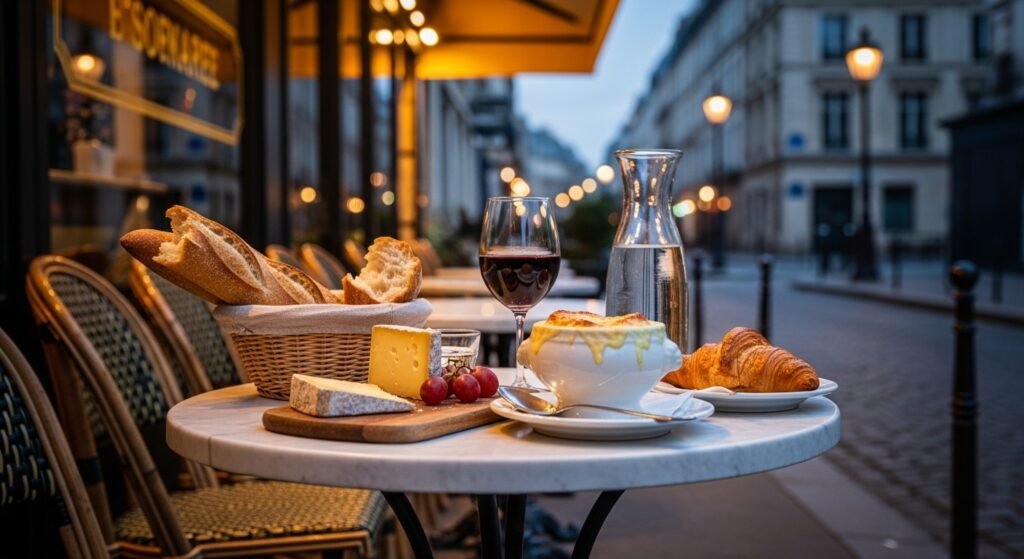
Paris is the dream spot for anyone who loves great food. This city serves as the world capital of taste. You will find amazing meals on every single corner. French dining is all about picking the best seasonal ingredients. Local chefs care more about quality than having a huge plate of food. You can find everything from cheap street snacks to fancy Michelin-starred meals. Eating here is like going on a big flavor adventure. This guide covers all the best things to eat in paris. Get ready to satisfy your cravings in the City of Light.
Introduction to the Parisian Gastronomic Experience
Paris is famous for its long history of cooking excellence. Every meal tells a story of tradition and hard work. You will see people taking their time to enjoy every bite. Food is not just fuel here; it is a way of life.
The philosophy of French dining is very simple and clear. Chefs use seasonal ingredients that are fresh from the farm. They believe that simple food tastes better when it is high quality. You won’t find many processed items in a real Parisian kitchen.
What to expect when dining out can vary quite a bit. You might grab a quick crepe from a street stall. Or you could sit in a cozy bistro for hours. There is also a cool trend called bistronomy happening right now. This combines high-end cooking with a relaxed and casual vibe.
The Essentials of Parisian Dining Etiquette
Eating in Paris has its own set of unwritten rules. Following them helps you blend in like a total pro. It also makes your dining experience much more smooth.
Navigating the Meal Structure
The French have a specific rhythm for their daily meals. They don’t usually snack much between these main times.
- Petit-Déjeuner: This is a very light breakfast usually eaten at home or a cafe. It usually involves a pastry and a hot coffee.
- Déjeuner: Lunch is the main event for many working people in the city. Shops often close for an hour so everyone can eat a real meal.
- Dîner: Dinner is a social time to hang out with friends and family. It is often multiple courses served with local wine.
Water, Service, and Tipping Culture
Money matters are handled differently in France than in the USA. Knowing these tips will save you some extra cash.
- Carafe d’eau: You can always ask for free tap water at any restaurant. It is perfectly safe to drink and tastes great.
- Service Compris: This means the service charge is already in the price. The price you see on the menu is the final price you pay.
- Tipping Etiquette: You do not have to leave a big tip here. Just leave a few small coins if the waiter was super nice.
Dining Times and Reservations
Timing is everything if you want to eat at the best spots. Parisians eat much later than people do in America.
- Late Dinners: Most restaurants do not even open for dinner until 7:00 PM. If you go at 6:00 PM, the doors will likely be locked.
- Reservations: Popular places fill up very fast every single night. Use an app or call ahead to make sure you get a table.
The Art of the French Breakfast and Viennoiserie
The smell of fresh bread is the best way to wake up. Every neighborhood has a local shop that smells like butter.
The Classic Boulangerie Experience
A boulangerie is a bakery that specializes in making fresh bread. These are the heart and soul of every Paris street.
- Artisan Boulanger: Look for this sign on the front of the shop. It means they bake everything from scratch right there.
- Handmade Quality: Real pastries are never perfectly identical in their shape. Little flaws show that a human hand actually made them.
Essential Morning Pastries

Viennoiserie are the sweet, flaky treats you eat for breakfast. They are a true miracle of butter and flour.
- Croissants: These should be golden and very crunchy on the outside. The inside should be soft and full of airy layers.
- Pain au Chocolat: This is like a croissant but with dark chocolate inside. It is a favorite for kids and adults alike.
- Almond Croissants: These are usually baked twice with a sweet almond cream. They are much heavier and sweeter than the regular kind.
- The Tartine: This is a simple piece of baguette with fresh butter. Locals love to dip it right into their morning coffee.
Modern Café Culture and Coffee
The coffee scene in Paris is changing for the better. You can now find great beans all over the city.
- Specialty Coffee: New shops focus on light roasts and pretty latte art. They are replacing the old bitter coffee from the past.
- Le Brunch: This is a big trend on Saturdays and Sundays now. It is a mix of breakfast food and heavier lunch dishes.
Lunch in Paris: The Sacred Midday Break
Lunch is the time to slow down and enjoy life. It is one of the best things to eat in paris.
The “Formule” or Set Menu
Most restaurants offer a special deal during the lunch hours. This is the smartest way to eat a fancy meal.
- Value for Money: You get two or three courses for one set price. It is much cheaper than ordering items one by one.
- Plat du Jour: This is the special dish the chef made for today. It usually uses whatever was freshest at the market.
Quick Eats and Street Food

If you are busy sightseeing, you can still eat like a king. Street food in Paris is high quality and delicious.
- Jambon-Beurre: This sandwich is just ham and butter on a baguette. It sounds simple but the quality makes it amazing.
- Falafel: Head to the Marais for the best falafel in the world. The pita is stuffed with crispy chickpeas and fresh veggies.
- Crêpes and Galettes: You can find sweet crepes or salty buckwheat galettes. They are cooked right in front of you on a hot griddle.
Iconic French Appetizers and Starters
French meals usually start with something small and very tasty. These starters help get your appetite ready for the main.

Escargot (Snails)
Eating snails is a classic part of a trip to Paris. They are a must-try for any adventurous food lover.
- Preparation: Snails are usually baked in a mix of butter and garlic. They also have plenty of fresh green parsley inside.
- Serving Styles: Sometimes they come in shells with special little tongs. Other times they are served in a ceramic dish without shells.
- Regional Context: Snails in Paris are a bit different than in Burgundy. They are often smaller but still packed with rich flavor.
French Onion Soup (Soupe à l’Oignon)
This soup is the ultimate comfort food on a cold day. It is thick, warm, and very satisfying to eat.
- Anatomy: It starts with a deep broth made from beef and onions. A thick slice of bread is placed right on top.
- The Cheese: A giant layer of Comte cheese is melted over the top. It gets crispy and brown in the hot oven.
Masterpieces of the French Main Course
The main course is where the chef really shows off skills. These dishes are famous all around the entire world.
The Staples of “Bistronomy”

Bistronomy combines great technique with a very friendly atmosphere. These dishes are found in most neighborhood bistros.
- Steak Frites: This is a juicy steak served with crispy French fries. It often comes with a creamy Béarnaise sauce on top.
- Steak au Poivre: This steak is coated in lots of cracked black pepper. It is served with a rich sauce made from cream and cognac.
- Duck Confit: The duck is cooked very slowly in its own fat. This makes the skin super crispy and the meat fall off.
- Garlicky Potatoes: These are the classic side dish for a duck meal. They soak up all the delicious fat from the duck.
Hearty Stews and Specialties
French stews are famous for being rich and full of flavor. They are perfect for a long, slow dinner with wine.
- Beef Bourguignon: This is beef slow-cooked in a red wine sauce. It has mushrooms, small onions, and bits of salty bacon.
- Soufflé as a Main: Soufflés are not just for dessert anymore. You can find savory ones filled with cheese or beef.
The Essential French Cheese Course
Cheese is a very serious business for people in France. It is usually served after the main but before dessert.
Understanding Fromage

There are hundreds of different types of cheese to try. Each one has its own unique smell and texture.
- Acquiring the Taste: Some French cheeses are very strong and smelly. Do not be afraid to try something new and bold.
- Comte: This is a hard cheese that most people really love. If it is aged 18 months, it has a nutty taste.
- Reblochon: This is a very soft and creamy cheese from the mountains. It is perfect when spread on a piece of crusty bread.
- Education: You can take a class to learn about cheese and wine. This helps you understand how different flavors work together.
Parisian Desserts and Sweet Endings
No meal in Paris is complete without a sweet treat. The pastry shops here look like jewelry stores.
The Art of the Soufflé
A soufflé is a very delicate dish that is hard to make. It is basically a cloud of eggs and flavor.
- Grand Marnier Soufflé: This version is flavored with a famous orange liqueur. It is light, airy, and very impressive to see.
- The Rise: A great soufflé must rise high above the edge of the dish. It should be wobbling slightly when the waiter brings it.
Patisserie Classics

Pastry shops, or pâtisseries, are full of colorful masterpieces. You should try at least one every single day.
- Paris Brest: This is a ring of pastry filled with hazelnut cream. It was made to celebrate a famous bicycle race long ago.
- Choux Pastry: This light dough is used for many different desserts. It is the base for éclairs and cream puffs.
- Bûche de Noël: This is a special cake shaped like a wooden log. It is the most popular dessert during the Christmas season.
Must-Visit Neighborhoods for Food Lovers
Every part of Paris has its own special food identity. You should wander through these areas with an empty stomach.
Le Marais (3rd & 4th Arrondissements)
This is one of the oldest and coolest parts of the city. It is full of history and amazing snacks.
- Jewish Heritage: This area has the best Jewish bakeries in the city. You can find great bread and pastries here.
- Trendy Coffee: There are many new-wave coffee shops in the Marais. It is the best place for a morning caffeine fix.
Saint-Germain-des-Prés (6th Arrondissement)
This area was once the home of many famous writers. It feels very fancy and traditionally French.
- Literary Cafés: You can sit where Hemingway and Sartre used to write. These cafes are expensive but very beautiful to see.
South Pigalle (SoPi)
This neighborhood is currently the hippest place for food. It has a young energy and many cool bars.
- Neo-Bistros: Chefs here are doing very creative and modern things. It is the best spot for an exciting dinner date.
Montmartre (18th Arrondissement)
This hill has a great view and some hidden food gems. Avoid the main squares to find the real local food.
- Sacre Fleur: This is a famous spot for meat lovers in Montmartre. Their steaks are cooked to perfection every single time.
A Perfect Three-Day Itinerary for Things to Eat in Paris

If you are feeling overwhelmed by all the choices, don’t worry. This three-day plan hits the best spots and flavors. It ensures you experience the most iconic things to eat in Paris without burning out. Wear your most comfortable walking shoes and bring a big appetite.
Day One: Classic Traditions and Iconic Landmarks
Start your first morning in the heart of the city near the Louvre. Find a bakery with the Artisan Boulanger sign for your first real croissant. Stand at the counter and dip your pastry into a hot bowl of cafe au lait. This is how locals kickstart their busy mornings before work.
For lunch, walk over to a traditional bistro for classic steak frites. Ask for your steak cooked medium-rare to get the best flavor from the meat. The golden fries should be hand-cut and very salty. Enjoy the fast-paced energy of a busy Parisian lunch hour.
Spend your afternoon walking through the Tuileries Garden to digest your heavy meal. For dinner, head to a cozy spot for a bowl of French onion soup. Follow it up with a slow-cooked duck confit that melts in your mouth. End the night with a Grand Marnier soufflé for a truly elegant finish.
- Breakfast: A butter croissant and a café crème at a local corner bar.
- Lunch: Steak frites with a glass of house red wine.
- Afternoon Snack: A few colorful macarons from a luxury pastry shop.
- Dinner: French onion soup followed by crispy duck confit.
Day Two: Street Food and Historic Neighborhoods
Begin your second day in the Marais district for a mix of old and new. Grab an almond croissant from a local bakery to enjoy while you explore the narrow streets. The shops here are beautiful and perfect for window shopping between bites.
When lunch rolls around, join the famous line for a giant falafel sandwich. It is one of the most popular things to eat in Paris for a very good reason. Find a nearby bench in a quiet square to eat your pita while it is still hot. The mix of spicy sauce and cool yogurt is a total dream.
In the evening, head up the hill to the artistic neighborhood of Montmartre. This is the perfect place to try a plate of garlic and butter escargot. For your main course, order a rich beef bourguignon that has been simmering all day. The view of the city lights makes everything taste even better.
- Breakfast: Freshly baked tartine with salted butter and strawberry jam.
- Lunch: A world-famous falafel wrap from Rue des Rosiers.
- Afternoon Snack: A warm Nutella crepe from a street vendor.
- Dinner: Escargot followed by a hearty bowl of beef bourguignon.
Day Three: Luxury Pastries and Gourmet Markets
On your final day, head to a local street market to see the fresh produce. Grab a piece of seasonal fruit and some local berries for a light breakfast. Watch the locals argue over the best cuts of meat and types of cheese.
For lunch, grab a jambon-beurre sandwich from a high-quality bakery near the river. Take it down to the banks of the Seine for a relaxing picnic. This is a great way to save money while enjoying a world-class view. Watch the boats go by as you crunch into your fresh baguette.
End your trip with a fancy dinner focused on the cheese course. Make sure to try some 18-month aged Comte and a creamy Reblochon. For your final dessert, find a shop that sells the famous Paris Brest. It is the perfect sweet ending to your big food adventure.
- Breakfast: Fresh seasonal fruit and yogurt from a street market.
- Lunch: A jambon-beurre sandwich enjoyed as a picnic by the river.
- Afternoon Snack: A slice of Paris Brest pastry with hazelnut cream.
- Dinner: A full cheese board followed by a steak au poivre.
Conclusion: Crafting Your Own Parisian Food Journey
Eating your way through Paris is a life-changing experience. There are so many things to eat in Paris that you can never be bored. Remember to act like a local and take your time. Don’t be afraid to try things that look strange at first.
| Food Type | Top Recommendation | Best Time to Eat |
| Pastry | Almond Croissant | Morning |
| Lunch | Jambon-Beurre | Afternoon |
| Dinner | Steak Frites | Evening |
| Dessert | Grand Marnier Soufflé | Late Night |
Frequently Asked Questions
What happens if I sit at a table without a place setting?
In many Parisian cafes, there is a clear distinction between tables for drinking and tables for eating. If you sit at a table that does not have a tablecloth or silverware already set out, it is likely reserved for those only ordering drinks. If you want to eat a full meal, look for the “mise en place” (the set table) or wait for a server to direct you to a dining section.
Is it okay to ask for a “doggy bag” for my leftovers?
While a law was passed in 2021 requiring restaurants to provide to-go containers to reduce waste, it is still not very common in local culture. In casual spots or places that already do takeaway, it is perfectly fine to ask. However, in high-end or Michelin-starred restaurants, it is still considered a bit inelegant and is rarely done unless you have a significant amount of food left.
Why do I have to say “Bonjour” immediately upon entering?
In France, “Bonjour” is more than a greeting; it is a required piece of social etiquette that acknowledges the staff. Entering a restaurant and immediately asking for a table without saying hello is considered quite rude. A simple “Bonjour” or “Bonsoir” after 6:00 PM sets a positive tone for your entire service.
Can I get butter with my bread basket?
It is a common surprise for travelers, but butter is almost never served with the bread basket during lunch or dinner in Paris. Bread is meant to be used as a tool to push food onto your fork or to sop up delicious sauces. If you really want butter, you can ask for “du beurre,” but some traditional bistros may not even have it on hand for the table.
How do I properly order the “doneness” of my steak?
French levels of cooking are generally rarer than American standards. “Bleu” is very rare (still blue/purple in the center), “Saignant” is rare (bloody), “À point” is medium-rare to medium, and “Bien cuit” is well-done. Be aware that many chefs consider “Bien cuit” a bit of an insult to a good cut of meat, and the steak may still have a hint of pink.
Is the tap water in Paris safe to drink?
Yes, the tap water in Paris is high-quality and perfectly safe. To get it for free at a restaurant, you must use the specific phrase “une carafe d’eau.” If you simply ask for “eau” (water), the waiter will likely bring you expensive bottled mineral water like Evian or Badoit.
Do I need to wait to be seated at a café?
If you see a sign that says “Accueil” or “Patientez s’il vous plaît,” you must wait. In casual outdoor cafes, you can often pick your own seat, but it is always polite to catch the eye of a server and give a small nod or ask “Pour deux?” (For two?) before sitting down.
Why is the service so much slower than back home?
In Paris, a table is yours for as long as you want it. Waiters will not rush you or bring the check until you specifically ask for it (“L’addition, s’il vous plaît”). They consider it rude to make you feel like they want you to leave. Enjoy the slow pace; it is part of the experience.
What is a “Café Gourmand” on the dessert menu?
If you can’t decide on one dessert, look for the Café Gourmand. It is a brilliant French invention that includes an espresso served with three or four “miniature” versions of the restaurant’s best desserts, such as a tiny chocolate mousse, a small macaron, and a bite-sized tart.
Can I find vegetarian and vegan options in Paris?
While traditional French cuisine is heavy on meat and cream, Paris has become very vegan-friendly in the last few years. Neighborhoods like the 10th and 11th Arrondissements are full of plant-based bistros. Look for “végétalien” (vegan) or “végétarien” (vegetarian) on menus.
Is it true that some restaurants don’t have menus?
Many of the best local bistros use an “Ardoise,” which is a chalkboard menu. The chef writes the day’s offerings based on what they found at the market that morning. If you don’t see a printed menu, look for a chalkboard hanging on the wall or propped up on a chair.
What is the “Apéro” hour?
The “Apéro” (apéritif) is a pre-dinner ritual, usually between 6:00 PM and 8:00 PM. It involves a light drink like a glass of wine or a Kir and some small snacks like olives or nuts. It is the bridge between the workday and the late Parisian dinner.
Should I put my bread on my plate?
Traditional etiquette says bread should be placed directly on the tablecloth next to your plate, not on the plate itself. You should also tear off small, bite-sized pieces of bread rather than biting directly into a large piece.
Are there “tourist trap” restaurants to avoid?
Generally, avoid restaurants with giant pictures of food on boards outside or places where the staff is actively shouting at people on the street to come in. These are often located near major landmarks like the Eiffel Tower and offer lower quality for higher prices.
How do I ask for the bill without being rude?
Waiters will almost never bring the bill until you ask. You can catch their eye and make a “writing” motion in the air with your hand, or simply say, “L’addition, s’il vous plaît.” It is not considered rude; it is the only way they know you are ready to leave.
Can I order just a coffee at a restaurant table?
During peak lunch (12:00 PM – 2:30 PM) and dinner (7:30 PM – 10:30 PM), tables are reserved for people eating full meals. If you only want a coffee, sit at the bar or find a café that doesn’t have place settings on the tables.
What are “Cornichons” often served with?
You will often see a small jar of tiny, tart green pickles served with pâté or charcuterie boards. These are cornichons. They are meant to be eaten with the rich, fatty meats to provide a sharp, acidic contrast that cleanses the palate.
Is there a “minimum charge” for credit cards?
Many smaller bakeries and older cafes have a minimum charge for credit cards, often between 5 and 10 Euros. It is always a good idea to keep some small coins or 5-Euro notes for buying a single croissant or an espresso.
What is the difference between a Bistro and a Brasserie?
A Bistro is usually small, family-run, and has a limited menu of home-style cooking. A Brasserie is much larger, often very beautiful with gold mirrors, and serves a wide variety of dishes (like oysters and steak) all day long without closing between lunch and dinner.
Do I have to pay for the bread?
In a sit-down restaurant, the bread basket is included for free as part of your meal. You can even ask for more (“Encore du pain, s’il vous plaît”) if you run out, and there should be no extra charge on your bill.