 Skip to content
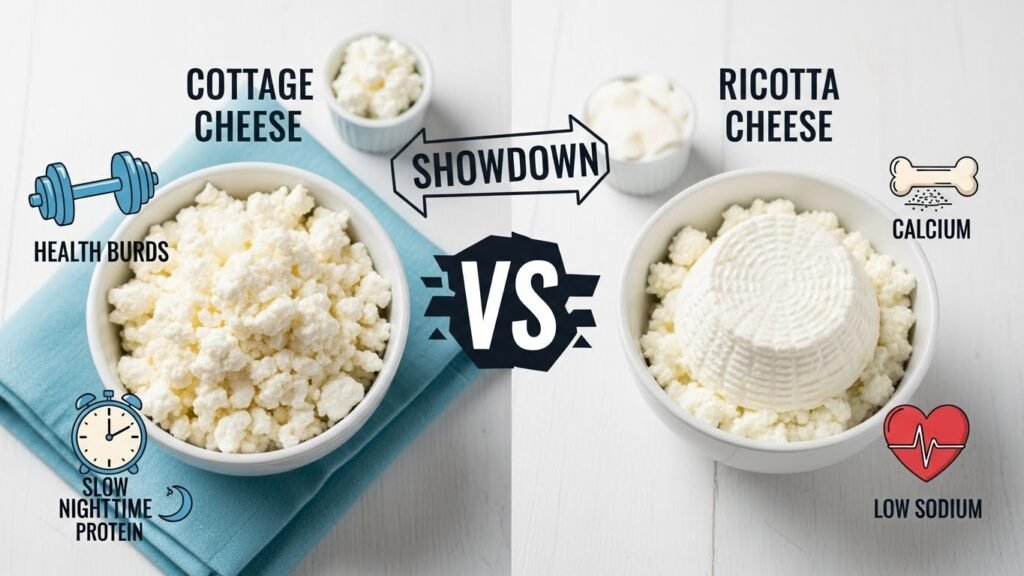
If you are navigating the dairy aisle, you have probably noticed two creamy white contenders: ricotta and cottage cheese. They look alike and often sit right next to each other. But when you compare Ricotta vs Cottage Cheese, you find some big differences. Cheeses are an essential source of nutrients and healthy compounds in many human diets. These two fresh cheeses are both shapeless and white, and they cost about the same. Choosing the right one depends entirely on your specific nutritional goals.
Production and Composition

The main differences between these two cheeses start with how they are actually made. Both dairy products come from the process of milk coagulation. Coagulation separates the milk into two key components: liquid whey and the milk solids, or curd. This foundational difference in origin sets the stage for every other distinction in flavor, texture, and nutrition.
Milk Coagulation: The Foundational Difference
Coagulation is a simple process. An acid, an enzyme, and sometimes heat are added to fluid milk. This addition separates the milk. It splits into the liquid whey and the milk solids, which are called the curd. Ricotta and cottage cheese then take two totally different paths. The origin—curd or whey—is key to the final product.
Cottage Cheese Production
Cottage cheese comes from the milk solids. Producers use pasteurized milk and inject it with an active lactic starter. This increases the acid concentration. They also add rennet to speed up the process of coagulation. This forms the milk solids into a curd. Workers then cube the curd and process it. They wash the curds with warm and cold water. Next, they press and compact it to remove more liquid whey. Finally, they rinse and salt it to produce the chunky finished product.
Ricotta Cheese Production
Ricotta cheese has a different story; it is made from the liquid whey. Historically, this fresh cheese was made in Italy, often from sheep’s milk whey. The Italian word “ricotta” literally means “re-cooked”. Producers take the initial liquid whey and reheat it, or add more acid, to make it coagulate again. The solids from this second coagulation are collected. They are then strained and pressed into the final ricotta texture. Today, due to high demand, modern methods sometimes use whey protein powders or a mixture of milk and whey.
Flavor and Texture

The differences in texture are a huge factor in deciding which cheese to use in your recipes.
Flavor Profile
Both cheeses have a mild flavor that blends easily into many recipes. Flavor is likely not the main selling point for either product. However, you can spot some minor differences. Ricotta cheese generally has a slightly sweeter flavor. Cottage cheese, on the other hand, has a slightly saltier taste.
Texture Differences
Texture is where these two really part ways.
- Cottage cheese: This cheese is characterized by its lumpy, chunky texture. It comes in small, medium, and large curds. The curds are much larger than ricotta’s grains. It is also generally wetter than fresh ricotta.
- Ricotta cheese: This dairy product has a smooth, creamy, and fine/slightly grainy texture. It has a uniform, smooth consistency. When you bake it, the texture becomes firmer.
Comprehensive Nutritional Content
Both cheeses pack a punch of vitamins, minerals, and healthy nutrients. Ricotta is generally higher in calcium, zinc, fats, and cholesterol, while cottage cheese is often higher in sugars and sodium.
Calories, Total Fats, and Cholesterol
When comparing Ricotta vs Cottage Cheese on macros, the fat content is the biggest difference.
- Cottage Cheese: It is generally lower in calories (around 98 kcal/100g) and lower in total fat ($\approx 4$g/100g). Cottage cheese is about 1.78 times lower in calories than whole milk ricotta. This makes it a popular choice for a low-calorie diet.
- Ricotta Cheese: This cheese tends to be higher in calories (150-174 kcal/100g) and is 3 times higher in total fat ($\approx 10-15$g/100g). Choosing low-fat dairy products is essential for people watching their fat intake.
- Cholesterol: Ricotta contains 51 mg/100g, making it 3 times higher in cholesterol than cottage cheese’s 17 mg/100g. This is a point to note for people managing their intake of cholesterol.
- Saturated/Unsaturated Fats: Ricotta possesses about 4.84 times more saturated fats than cottage cheese. Ricotta also has significantly more unsaturated fats, including 3.13 times more polyunsaturated fats and 4.67 times more monounsaturated fats.
- Conjugated Linoleic Acid (CLA): Both dairy products are rich in CLA. CLA is a healthy fat that may offer anti-cancer properties.
Protein Content and Amino Acid Profile
Both dairy products are high in protein, which is vital for many body functions.
- Cottage Cheese: This dairy is often higher in protein (11.12g in 100g or up to 14g per half-cup serving). The high protein content makes it a staple for muscle building.
- It is higher in the essential amino acids Tryptophan, Isoleucine, Phenylalanine, and Valine. These are crucial for protein synthesis.
- Ricotta Cheese: It has a slightly lower, but still moderate, protein content (11.26g in 100g or 7g to 10g/100g in some versions). It still contributes significantly to your daily protein requirements.
- Ricotta is richer in Threonine, Leucine, Lysine, Methionine, and Histidine.
Carbohydrates, Sugars, and Lactose
Neither product is a big source of carbs, fitting well into many dietary styles.
- Cottage Cheese: It is slightly higher in carbohydrates (3.38 g in 100 g). It is also around 9.88 times higher in sugars than ricotta, which gives it a slight sweetness.
- Ricotta Cheese: It has slightly fewer carbohydrates (3.04 g in 100 g). This makes it a strong contender for low-carb diets.
- Neither cheese contains any Fiber, though both are relatively low in lactose compared to milk.
Key Minerals and Electrolytes

Minerals are key for bone health and fluid balance. Both cheeses offer a rich source of micronutrients.
- Ricotta Cheese:
- Superior in: Ricotta is richer in Iron, Magnesium, Zinc (190% more), Selenium, and Manganese.
- Calcium: It contains 149.4% more Calcium (2.5 times higher) than cottage cheese. Calcium is vital for bone health and strength.
- Sodium: It contains 76.9% less sodium compared to cottage cheese. This is a crucial distinction for managing blood pressure.
- Cottage Cheese:
- Richer in: Copper (+38.1%).
- It is rich in Phosphorus and Potassium. Potassium is essential for heart function.
Vitamin Profile
Vitamins are necessary for overall health, and both cheeses deliver.
- Ricotta Cheese:
- Richer in: Ricotta is richer in Vitamin A (224.3% more), Vitamin E, Vitamin D (100% more), Vitamin K, and Vitamin B2. Vitamin D works with calcium to support bones.
- Cottage Cheese:
- Richer in: Cottage cheese has higher content of Vitamin B1, Vitamin B5, and Vitamin B12. Vitamin B12 is crucial for nerve function and energy.
- Equal Content: Both have equal amounts of Vitamin C, Vitamin B3 (Niacin), Vitamin B6, and Folate.
Varieties, Grading, and Commercial Forms
The terms “ricotta” and “cottage cheese” include several different commercial products. Understanding these variations is key, as they change the fat content, texture, flavor, and how you use the cheese in your cooking.
Cottage Cheese Types and Fat Content
You can define cottage cheese mainly by two things: the amount of cream added back to the curd and the size of the curds themselves.
- Dry-Curd Cottage Cheese (Uncreamed): This is the pure curd after producers wash and separate it. It has no added liquid like cream or milk. It is extremely low in fat (often less than 0.5% milkfat). This type works great for recipes that need firm curds or when you want the most protein with the least fat.
- Creamed Cottage Cheese (Dressed): This is the version most people buy. Producers categorize it by its milkfat percentage:
- Non-fat or Fat-free: Less than 0.5% milkfat.
- Low-fat: Usually 1% or 2% milkfat.
- Regular: Usually 4% milkfat.
- Curd Size: Cottage cheese comes in small, medium, and large curds. This is just about texture; the size does not change the nutritional value. Large curds give a firmer, more distinct bite, while small curds feel smoother.
Ricotta Varieties and Milk Sources

Ricotta has a wider range of textures and flavors. This range depends on how long it has been aged and the type of animal milk used.
- Ricotta Fresca (Fresh): This is the soft, moist, and mildly sweet version that we compare to cottage cheese. You should eat it soon after buying. It is the best choice for creamy desserts like cannoli.
- Ricotta Salata: This variety is a big change from fresh ricotta. Producers salt, press, and age this ricotta for several months. It becomes a firm, dry, and salty cheese that you cannot spread. You use Ricotta Salata only for grating over pasta or salads.
- Ricotta Infornata or Affumicata: Producers either bake (“infornata”) or smoke (“affumicata”) this type of ricotta. Baking gives it a lightly browned crust, and smoking gives it a deep, smoky flavor. People typically eat these as table cheeses with bread or fruit.
- Milk Source: Most ricotta in North America comes from cow’s milk. However, traditional Italian ricotta uses sheep’s milk whey, which is noticeably sweeter and creamier. Ricotta can also be made from goat’s milk or buffalo’s milk, each offering a slight change in flavor.
Probiotic Content and Gut Health
The effect of dairy on your gut bacteria is a very important part of modern health research. While both cheeses are nutritious, they affect your gut health differently based on how they are processed.
Cottage Cheese: A Potential Probiotic Powerhouse
Making cottage cheese involves using active starter cultures, which are beneficial bacteria.
- Live and Active Cultures: Many brands of cottage cheese are a good source of live and active cultures (probiotics). These helpful bacteria often survive digestion and help populate your gut.
- Gut Microbiome Support: Eating these probiotics can help create a healthier mix of gut bacteria. This healthy mix is strongly connected to better immune function and nutrient absorption.
- Check the Label: If you are buying cottage cheese specifically for probiotics, look for the words “contains live and active cultures” on the label. High heat used in some processes can kill these beneficial bacteria.
Ricotta’s Limited Probiotic Role
The traditional way of making ricotta severely limits its potential to provide probiotics.
- Heat Kills Cultures: Ricotta is made by “re-cooking” the whey at high temperatures. While this heat makes the whey coagulate again, it generally kills any good bacteria that may have survived the first cheesemaking process.
- Neutral Impact: Ricotta does not actively harm your gut bacteria, but it also does not actively boost it. You should view it mainly as a source of protein and calcium.
- Modern Exceptions: Some modern companies add probiotic cultures back into the finished ricotta. If you want a probiotic ricotta, check the label for clear statements about added cultures.
Shelf Life, Storage, and Practical Handling

As fresh cheeses that have not been aged, both ricotta and cottage cheese spoil quickly. Proper storage is necessary to keep them safe, tasting good, and maintain their texture.
Short Shelf Life and Refrigeration
- Average Longevity: Both cheeses typically stay good for 10 to 14 days from when they were made, if they are unopened and refrigerated. Once you open the container, you should eat the cheese within five to seven days.
- Signs of Spoilage: Look out for obvious signs like mold, a strong sour or acidic smell, or a change in texture (like being too watery or having a hard, dried-out surface).
- Temperature Matters: Always keep these products at or below 40°F (4°C). Leaving them out at room temperature for more than two hours dramatically increases the chance of bacterial growth and spoilage.
Freezing: A Complex Option
You can freeze fresh dairy, but the process changes the final texture significantly because both cheeses have a high water content.
- Cottage Cheese: We generally do not recommend freezing cottage cheese to eat plain. Freezing separates the water from the curd, making the cheese watery, gritty, and spongy once it thaws.
- Ricotta Cheese: Ricotta handles freezing slightly better because it is smoother. While it will lose some creaminess and become a little grainy, you can still use it for cooked dishes. Thawed ricotta works well in baked foods like lasagna or baked ziti, where the texture change is hidden by the other ingredients.
- Best Practice: If you need to freeze ricotta, wrap it tightly in plastic wrap and then put it in a freezer-safe bag. Thaw it slowly in the refrigerator overnight before using.
Cultural and Historical Context
Looking at the history of these two fresh cheeses shows their unique importance in global food traditions and how they became popular.
Ricotta’s Ancient Mediterranean Heritage
Ricotta’s history goes all the way back to the Bronze Age in Italy and Greece. The method of using the leftover whey was an efficient way to ensure nothing was wasted during the cheesemaking process.
- Bronze Age Beginnings: Archaeologists have found ancient cheese strainers, suggesting that a “re-cooked” whey cheese was being made thousands of years ago.
- Mediterranean Staple: Ricotta became central to Italian cooking. People valued it for its mild flavor and its ability to work in both sweet and savory recipes.
- Symbol of Freshness: The name fresca (fresh) highlights its simple, traditional nature. It remains a key ingredient in Italian baking today, especially in southern Italy.
Cottage Cheese’s American Evolution
Cottage cheese has a more recent history, though the basic method has existed for centuries. Its rise in America is linked to economic and health trends.
- “Cottage” Name: The name comes from making a simple cheese from milk left over after churning butter, which was often done in small farm “cottages.”
- Wartime Staple: Cottage cheese became very popular during the World Wars when meat was rationed. It was promoted as a cheap, protein-rich food to replace meat.
- The Diet Food of the 20th Century: For many decades, cottage cheese was famous as a “diet food.” Its high protein and low-fat versions made it a core food on almost every weight-loss plan.
Cost and Market Comparison
While the price of the basic versions is similar, looking at the cost per nutrient helps smart shoppers choose the best economic option.
Price Variability and Value
- Standard Pricing: Basic store brands of cottage cheese and ricotta are usually priced similarly and are affordable sources of protein.
- Specialty Costs: The price gets much higher for:
- Artisan/Traditional Ricotta: This includes cheeses made from sheep’s milk or small-batch operations.
- Organic/Grass-Fed Cottage Cheese: These cost more due to the better feed and living conditions for the cows, but they offer nutritional benefits like higher levels of healthy Omega-3 fats.
Cost Per Nutrient Analysis
- Protein Value: Cottage cheese usually gives you a slightly better price-to-protein ratio. Because it has more grams of protein per serving and is often cheaper than premium ricotta, it is the most budget-friendly option for pure protein.
- Calcium Value: Ricotta cheese offers a better deal when you calculate the cost per milligram of calcium. Since it has much more calcium, you spend less money to meet your daily calcium goal by buying ricotta.
Safety and Food Interactions (Tyramine)
Addressing potential interactions with medicine is essential for consumer safety, especially regarding a naturally occurring compound called tyramine.
Low Tyramine Content
Tyramine is a natural compound in many foods that can affect blood pressure. The longer a cheese is aged, the more tyramine it contains.
- Fresh Cheese Advantage: Because both ricotta and cottage cheese are fresh and not aged, they contain very low levels of tyramine.
- Safety for MAOI Users: This low level is critical for people taking Monoamine Oxidase Inhibitors (MAOIs), a type of antidepressant. People on MAOIs must strictly limit tyramine intake, as too much can cause a dangerous spike in blood pressure. Ricotta and cottage cheese are among the safest dairy options for these individuals. Aged cheeses (like Parmesan or aged cheddar) must be completely avoided.
Importance of Freshness
The main safety concern for both cheeses is simply spoilage. Because they are fresh and moist, they can quickly grow bacteria if you do not store them correctly. This risk is higher than with hard, aged cheeses. Always throw them away immediately if you see any mold, strange discoloration, or a sour smell.
Health Implications and Functional Benefits
The type of protein in each cheese is the biggest functional difference. Understanding this difference helps you time your consumption for maximum benefit, especially when focusing on fitness.
Bodybuilding, Muscle Growth, and Recovery

Both dairy products are fantastic for muscle building when paired with exercise. However, they work differently after you eat them.
- Cottage Cheese (Casein): The protein is primarily Casein, which is known as a slow-digesting protein. It releases its amino acids slowly and steadily over several hours. This makes it an ideal choice for consumption before bed or during long fasts. It works to prevent muscle loss, which is known as catabolism.
- Ricotta Cheese (Whey): The protein is primarily Whey protein, which is known as a fast-digesting protein. Whey protein is highly effective at immediately inducing muscle protein synthesis (MPS), which is the process of building new muscle tissue. Adding ricotta cheese to your diet has been shown to improve appendicular skeletal muscle mass. It also decreases muscle strength loss, supporting overall physical fitness.
Weight Management and Satiety
Both are excellent tools for managing weight, primarily because of their high protein content.
- Cottage Cheese Preference: It is often preferred for weight loss because its calories mostly come from protein. This high protein-to-calorie ratio strongly promotes satiety (a feeling of fullness). Feeling full helps control your appetite and makes sticking to a low-calorie diet easier.
- Ricotta and Calcium: Ricotta is 2.5 times higher in calcium. Some studies suggest that the higher calcium intake may have an anti-obesity effect, complementing a weight management plan.
Cardiovascular and Blood Pressure Health
Dairy intake can be beneficial for the heart, but you must be mindful of sodium levels.
- Ricotta’s Advantages: It is significantly lower in sodium, making it a smarter choice for individuals working to manage or lower their blood pressure. Ricotta consumption may also help lower LDL (bad cholesterol) levels.
- Cottage Cheese Caution: The much higher sodium content in most cottage cheese brands is a significant concern for heart health. High sodium intake is closely linked to increased blood pressure.
- Shared Benefit: Both contain potassium and calcium, both of which are electrolytes known for their role in regulating blood pressure. Both cheeses may also contain peptides that can inhibit ACE, which provides cardioprotective benefits.
Bone Health and Disease Prevention
Both cheeses contribute important micronutrients that help fight disease and maintain long-term skeletal health.
- Bone Health: Both are excellent sources of calcium and phosphorus, which are absolutely essential for bone strength and density. Ricotta is superior because it is significantly higher in calcium and Vitamin D, two nutrients crucial for skeletal maintenance.
- Diabetes: Both have a low Glycemic Index, meaning they will not cause a sudden spike in blood sugar levels. The high protein in cottage cheese can decrease hyperglycemia in type 2 diabetic patients. The high calcium in ricotta may help prevent insulin resistance syndrome.
- Cancer: Both are rich in CLA. The calcium, Vitamin D, and sphingomyelin found in cheese may have a protective effect against colon cancer. Interestingly, full-fat dairy is also linked to a decreased risk of breast cancer in some studies.
Downsides, Risks, and Digestion
It is important to consider individual sensitivities before making either cheese a regular part of your meal prep.
- Allergic Reactions: Both cheeses are dairy products and contain milk proteins, Casein and Whey. People with a cow milk protein allergy (CMPI) should completely avoid both dairy products.
- Lactose Intolerance: Both are naturally low in lactose compared to plain milk. However, ricotta cheese may be slightly easier to digest for those with mild lactose intolerance. This is because it is made mostly from whey, which contains less lactose than the Casein-rich curd in cottage cheese. Lactose intolerance is far more common than a milk protein allergy.
Suitability for Specific Diets
The choice between Ricotta vs Cottage Cheese is often determined by the strict requirements of a specialized diet plan.
- Low-calorie/Low-fat diet: Choose cottage cheese (using low-fat varieties) due to its fewer calories and lower fat content. This helps in managing total calorie intake.
- Low-carb/Atkins diet: Choose ricotta cheese because it generally has slightly fewer carbohydrates. This aligns better with the macro goals of a restrictive low-carb diets.
- Low Sodium Diet: Ricotta cheese is the clear winner for individuals on a sodium-restricted plan because it is naturally much lower in sodium.
- High Calcium Diet: Ricotta cheese is superior for anyone needing to maximize their calcium intake for bone health.
- Renal Diet: Cottage cheese is often a better choice because it typically requires lower phosphorus and potassium intake, which can be high in other dairy products.
- DASH/Mediterranean diet: You can include low-fat and low-sodium versions of either cheese in moderation. These diets focus on balanced, whole foods.
- Anti-inflammatory diet: Grass-fed cottage cheese is often recommended because it provides higher levels of Omega-3 fatty acids, which possess anti-inflammatory properties.
- Keto diet: Neither is an ideal staple like a hard, full-fat cheese. They contain a higher proportion of carbs relative to fat compared to other Keto-friendly dairy products. You must watch your portions carefully to stay in ketosis.
Practical Applications: Choosing the Right Cheese

When comparing Ricotta vs Cottage Cheese, the final decision often comes down to the desired texture and role in a specific recipe.
When to Choose Cottage Cheese
- You want a product that is lower in calorie or lower in fat.
- You are looking to maximize protein content for a snack or meal.
- You are seeking the benefit of slow-digesting casein protein before bed.
- You want to add a unique, chunky, lumpy texture to your recipe. Cottage cheese is excellent in salads, as a savory snack with vegetables, or mixed into pastas for a rustic feel.
- It is often used in savory bakes, like lasagna for a lower-calorie, Protein+ option, or blended into smoothies for thickness without a change in taste.
When to Choose Ricotta Cheese
- You are trying to lower the sodium content of a dish.
- You need to increase your calcium intake.
- You need a smoother, creamy, and uniform consistency for your recipe. This is essential for professional results.
- It is ideal for achieving a smooth, thick consistency in classic Italian baked goods like cannoli and cheesecake.
- Ricotta is the perfect choice for smooth pasta fillings, such as stuffed shells, ravioli, or Mac & Cheese, where a silky texture is desired.
- It can also be used as a delicious, creamy base for dips or puddings.
Ricotta vs Cottage Cheese: A Final Nutritional Comparison (Table Summary)
| Nutritional Component (per 100g, approx.) | Cottage Cheese | Ricotta Cheese | Key Difference/Health Impact |
| Calories | Lower ($\approx 98$ kcal) | Higher ($\approx 150-174$ kcal) | Cottage cheese is better for low-calorie diets. |
| Total Fat | Lower ($\approx 4$g) | Higher ($\approx 10-15$g) | Ricotta has 3 times more fat. |
| Protein | Higher (Up to 14g) | Moderate (7g-11g) | Cottage cheese is usually higher in grams and rich in Casein. |
| Sugars | Higher (9.88x more) | Lower | Cottage cheese has a sweeter flavour due to higher sugars. |
| Sodium | Higher | Lower (76.9% less) | Ricotta is better for blood pressure/Low Sodium Diets. |
| Calcium | Lower | Higher (149.4% more) | Ricotta is superior for bone health. |
| Protein Type | Casein (Slow) | Whey (Fast) | Cottage is better for nighttime recovery; Ricotta for immediate muscle synthesis. |
Conclusion: Choosing the Right Curd for Your Goals
When it comes down to the ultimate showdown of Ricotta vs Cottage Cheese, neither cheese is inherently “better” than the other. Both are exceptional, fresh dairy products, but they excel in different roles, driven entirely by their production process—one from the milk solids (curd) and the other from the liquid whey.
Your final choice should align perfectly with your specific dietary needs, health goals, and culinary plans:
- Choose Cottage Cheese when: Your primary goal is weight management, maximizing protein, or controlling slow-release energy. It offers a superior protein-to-calorie ratio, making it ideal for satiety and late-night muscle recovery due to its Casein content. However, be mindful of its higher sodium content.
- Choose Ricotta Cheese when: You are focused on skeletal health, sodium restriction, or achieving a smooth texture. Ricotta is the clear winner for calcium and Vitamin D, making it superior for bone density. Its inherently lower sodium count is better for cardiovascular health, and its Whey protein is perfect for quick muscle synthesis post-exercise.
Understanding the subtle differences—from cottage cheese’s chunky, salty bite to ricotta’s creamy, sweet profile—allows you to use these traditional cheeses to their fullest potential, whether you are crafting a high-protein breakfast, baking a smooth Italian dessert, or managing a specialized diet. Both offer high-quality nutrition; you simply need to select the one that supports your personal path to wellness.
Frequently Asked Questions (FAQs)
Can I make ricotta cheese or cottage cheese at home easily?
Yes, you can easily make both cheeses at home. Cottage cheese requires milk and an acidic agent (like vinegar or lemon juice) or a bacterial culture, which curdles the milk solids. Ricotta, in its simplest form, involves boiling milk or heating the whey byproduct and adding acid until curds form. Homemade versions are often fresher and allow you to control the fat and salt content.
Are these cheeses considered “aged” or “fresh” cheeses?
Both ricotta and cottage cheese are considered fresh cheeses. They are not aged or ripened like cheeses such as cheddar or Brie. Their moisture content is very high, which contributes to their short shelf life and mild flavor. The exception is Ricotta Salata, which is salted and aged, making it a firm, dry cheese.
What is the ideal texture and moisture level for high-quality fresh ricotta?
High-quality fresh ricotta should be smooth, creamy, and wet, but not watery. It should hold its shape slightly and look like fine, soft grains. If it is too watery, it means the producers did not strain it enough. If it is dry or rubbery, it may be older or have been handled improperly.
How does the fat content in cottage cheese affect its texture and flavor?
Higher fat content (4% or regular creamed) in cottage cheese results in curds that are softer, creamier, and richer in flavor. The added cream dressing coats the curds, masking some of the tanginess. Low-fat or non-fat varieties have firmer, often drier curds and a tangier flavor.
Is sheep’s milk ricotta nutritionally different from cow’s milk ricotta?
Yes. Sheep’s milk ricotta is traditionally sweeter, creamier, and contains slightly higher levels of fat and protein compared to cow’s milk ricotta. It is also naturally higher in certain vitamins, such as B vitamins, and may contain different casein proteins, which some people find easier to digest.
What is the “whey” that ricotta is made from, exactly?
Whey is the pale, yellowish, watery liquid that separates from the milk solids (curds) during the initial cheesemaking process (like when making cheddar or cottage cheese). Whey is highly nutritious; it contains fast-digesting whey protein, lactose, and minerals. Ricotta is made by recovering the remaining protein in this liquid by re-cooking it.
How can I make ricotta cheese less watery for baking or filling pasta?
To make ricotta cheese less watery for baking (like in lasagna or cannoli), you should drain it. Line a colander with cheesecloth or a coffee filter, place the ricotta in it, and let it drain in the refrigerator for at least 4 to 12 hours. This process removes excess moisture, preventing the final product from becoming soggy.
Does the nutritional information change significantly if I buy organic versions?
Yes. Organic and especially grass-fed versions of both cheeses often contain higher levels of beneficial fats, specifically Conjugated Linoleic Acid (CLA) and Omega-3 fatty acids. These fats offer anti-inflammatory benefits compared to conventionally raised dairy. The general calorie and protein counts remain similar.
What are common stabilizers or thickeners used in commercial cottage cheese?
Commercial cottage cheese often uses stabilizers and thickeners to prevent the liquid (whey) from separating from the curds and maintain a creamy consistency. Common additives include carrageenan, guar gum, and locust bean gum. If you prefer a pure product, look for brands with just milk, salt, and cultures.
Can cottage cheese be melted and used like mozzarella?
No. Cottage cheese will not melt smoothly like hard cheeses. Because of its high moisture and low-fat-to-protein ratio (especially low-fat varieties), when heated, it tends to separate into a watery liquid and tough, rubbery protein curds. It is best used in baked dishes where it stays mixed with other ingredients, like a casserole.
Is the sugar content in either cheese a concern for a diabetic diet?
The sugar content in both cheeses primarily comes from lactose, which is naturally occurring in milk. Since both cheeses are low in total carbs and have a low Glycemic Index, they generally do not cause a sharp rise in blood sugar. They are considered safe for diabetic diets when consumed in moderation. The high protein and fat content also helps stabilize blood glucose levels.
What are the main uses for Ricotta Salata?
Ricotta Salata (the salted, aged, and firm variety) is used primarily as a grating cheese. It has a salty, slightly tangy flavor and a dry, crumbly texture. You grate it over salads, pasta dishes (especially Sicilian recipes), or use it in place of feta or Parmesan where a crumbly, non-melting texture is desired.
Why did cottage cheese become a popular “diet food” in America?
Cottage cheese gained fame as a diet food in the 20th century because of its excellent protein-to-calorie ratio. When dieters needed to reduce fat and carbohydrates while remaining full, cottage cheese offered a satisfying, high-protein alternative to traditional, full-fat foods.
Does the pasteurization process affect the nutrition of either cheese?
Pasteurization (heating milk to kill bacteria) ensures food safety but does not significantly alter the macronutrients (protein, fat, carbs) or mineral content. It may slightly reduce the level of certain heat-sensitive vitamins, but the overall nutritional contribution of both cheeses remains high.
What is the difference between cottage cheese and farmer’s cheese?
Farmer’s cheese is made similarly to dry-curd cottage cheese, but the curds are typically pressed much tighter and for longer. This pressing removes far more moisture, resulting in a denser, drier, and more compact block of cheese that can be sliced or crumbled, unlike the loose curds of cottage cheese.
Can I substitute Greek yogurt for either ricotta or cottage cheese?
You can sometimes substitute Greek yogurt for ricotta in savory fillings or baking (e.g., cheesecake), as Greek yogurt is thick and tangy. However, Greek yogurt is a poor substitute for cottage cheese because it lacks the chunky curd texture.
What should I look for if I want the highest protein content?
For the highest protein content, look for dry-curd cottage cheese or low-fat (1% or 2%) cottage cheese. These versions have the lowest fat content, meaning the protein is concentrated. Always check the nutrition label, as some brands pack more protein per serving than others.
Is it safe to eat cottage cheese if the liquid separates?
Yes, a small amount of clear liquid (whey) naturally separates and collects in cottage cheese containers—this is normal and safe. You can simply stir it back in. However, if the liquid is cloudy, excessive, or the cheese smells sour, the separation is a sign of spoilage, and you should discard the cheese.
Are there any savory uses for fresh ricotta?
Absolutely. While often associated with sweet cannoli and cheesecakes, fresh ricotta is a staple in savory Italian cooking. You use it in pasta fillings (ravioli, manicotti), as a topping for pizza, folded into scrambled eggs, or mixed with herbs to create a simple, creamy dip or spread for crostini.
How does the price of organic vs. conventional versions of these cheeses compare?
Organic and grass-fed versions of both cheeses are usually 30% to 50% more expensive than conventional store-brand varieties. This higher cost reflects the certified organic farming practices and the higher-quality feed given to the dairy animals. You pay more for the ethical and potential nutritional benefits (like higher Omega-3s).
What role do the “active lactic starter” and “rennet” play in cottage cheese?
The active lactic starter is a bacteria culture that converts lactose (milk sugar) into lactic acid, which causes the milk to curdle and gives the cheese its slight tang. Rennet is an enzyme that helps speed up the coagulation process, resulting in firmer, cleaner curds.
How does ricotta compare to cream cheese in baking?
Ricotta is much lighter and has a fraction of the fat content of cream cheese. When used in baking, ricotta provides a delicate, moist texture and a slight sweetness. Cream cheese provides a much denser, tangier, and richer result. You should generally not substitute them 1:1 in recipes.