 Skip to content
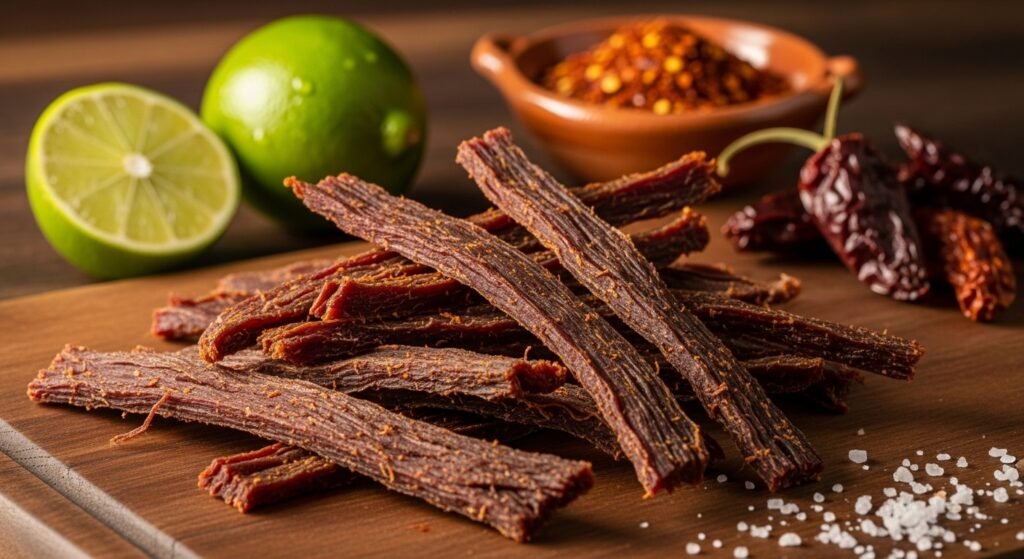
Carne seca is the legendary king of dried beef snacks from the Southwest and Mexico. This traditional treat is way better than your average gas station jerky. People have loved this savory snack for hundreds of years because it tastes amazing. It is the perfect choice for anyone who needs a healthy and salty boost.
Understanding Carne Seca: The Traditional Southwestern Staple
Definition and Etymology
The name carne seca comes from the Spanish language and means dried meat. It refers to beef that has been salted and dried out completely. This process turns fresh muscle meat into a shelf-stable powerhouse. It is much thinner and crispier than the thick jerky you see in stores.
Historical Context
Ancient tribes in the desert like the Chichimecas and Apaches first made this. They needed a way to keep meat from spoiling in the hot sun. They used what they had in the desert to stay alive. This ancient skill was passed down through many busy generations of families.
Original Purpose
Before people had refrigerators, they had to be very smart about food. Drying meat allowed hunters to keep their food fresh for many months. It was a vital survival tool for traveling across long desert distances. This method kept the protein safe from rot and bad bacteria.
Evolution of Protein
In the old days, people mostly used wild venison or elk. When Spanish explorers brought cattle, beef became the new favorite choice. Now, high-quality beef is the standard for making authentic carne seca. You can still find people using game meat for a wild taste.
Regional Variations and Cultural Significance
A Northern Mexican Specialty
The city of Monterrey is world-famous for its incredible dried beef. In Northern Mexico, this meat is a major part of the culture. You will see it sold in big markets and small shops everywhere. It is a point of pride for the local people there.
New Mexico Tradition
New Mexico has its own special way of making this snack. They love to use local ingredients like famous New Mexico Red Chile. The green chile version is also a massive hit with locals. This gives the meat a smoky and spicy kick you cannot find elsewhere.
The Economics of Carne Seca
This snack is often more expensive than other types of meat. This is because the meat shrinks a lot while it dries out. You only get about one pound of snack from three pounds of beef. The high price reflects the time and meat used to make it.
Authenticity Standards
Real carne seca should always be all-natural and free of preservatives. It does not need weird chemicals because the salt and air do the work. Authentic versions focus on the natural umami flavor of the beef. Avoid any brands that use lots of sugar or fake dyes.
Nutritional Value and Health Benefits
High Protein Density
This snack is basically a concentrated block of pure muscle-building protein. One small serving can give you up to 19 grams of protein. This makes it a favorite for weightlifters and active people. It helps you stay full for a very long time.
Weight Management
If you want to lose weight, this is your secret weapon. It has very few calories compared to chips or sugary snacks. There is almost no fat because you use the leanest beef cuts. It satisfies your salt cravings without ruining your healthy diet.
Dietary Compatibility
Carne seca is a dream come true for modern diet plans.
- Keto-friendly because it has zero or very low carbohydrates.
- Gluten-free since it uses salt and spices instead of soy sauce.
- Paleo-approved because it mimics how our ancestors ate meat.
- Low-sugar unlike most commercial beef jerky brands.
Mineral Content
Your body gets a big boost of essential minerals from this beef. It is loaded with iron which helps your blood stay healthy. You get about 15% of your daily iron in one sitting. It also provides zinc and B vitamins for extra energy.
Modern Lifestyle Integration
Outdoor Performance Food
Hikers and campers love carne seca because it is very light. You can toss it in a backpack and it won’t weigh you down. It stays fresh even when you are out in the wild. It gives you the salt your body loses when you sweat.
Healthy Home Snacking
Many families now keep this in their pantry for a quick bite. It is much better for kids than greasy potato chips. You can eat it straight from the bag while watching a game. It is the ultimate guilt-free snack for busy people.
Comparative Study: Carne Seca vs. Global Dried Meats
Carne Seca vs. American Beef Jerky
American jerky is often thick, soft, and very sweet. Carne seca is much thinner and has a brittle or leathery texture. Jerky uses liquid marinades while seca usually relies on dry salt. Seca tastes more like real beef and less like candy.
The South American Connection
Deep in the Andes Mountains, people made a snack called ch’arki. This is where the modern word jerky actually comes from. Spanish conquistadors saw this and brought the idea to Mexico. Both cultures used the dry mountain or desert air to cure meat.
Carne Seca vs. South African Biltong
Biltong is usually cured with vinegar and cut into very thick slabs. It stays quite moist and soft in the middle. Carne seca is sliced paper-thin before it ever touches the heat. Seca is much crunchier and saltier than the vinegar-heavy biltong.
Machaca vs. Carne Seca
People often get these two terms totally mixed up. Carne seca refers to the whole sheets of dried beef. Machaca is what you get when you pound or shred that meat. You start with seca and end with machaca for your recipes.
The Science of Meat Selection for Drying
Muscle Fiber Analysis
You want beef with long and clear muscle fibers for the best results. The “Round” family of cuts is perfect for this task. These muscles are strong because the cow uses them to move. They hold their shape perfectly even when they are sliced very thin.
The Fat Paradox
Fat is usually great for flavor, but it is a disaster for drying. Fat contains moisture and can turn rancid very quickly. If your meat has fat, your snack will spoil in just days. You must trim away every single white bit you see.
Connective Tissue Management
Silverskin and gristle will become like rubber bands if you leave them. They are impossible to chew once the meat is fully dried. Taking the time to clean the meat makes the final snack much better. It ensures every bite is tender and easy to eat.
Sourcing Ethical Beef
The quality of the cow determines the quality of your carne seca. Grass-fed beef often has a deeper and more complex flavor. It is usually leaner which makes the trimming process much easier. Buying local beef supports farmers and ensures the meat is fresh.
Essential Ingredients and Equipment

Protein Selection
- Top Round is the most popular choice because it is huge and lean.
- Eye of Round is shaped like a log and is very easy to slice.
- Sirloin offers a more premium and tender beef flavor.
- Game Meat like venison or buffalo adds a unique earthy taste.
The Critical Importance of Lean Meat
You cannot skip the trimming step if you want a shelf-stable snack.
- Remove all fat to prevent the meat from going bad.
- Use sharp tools to get a clean cut on the muscle.
- Keep it cold while you work to keep the meat safe.
Seasoning and Curing Agents
- Kosher salt is the best for drawing out moisture.
- New Mexico Chile adds the authentic heat and color.
- Garlic and Onion powder can add a savory boost.
- Black pepper gives it a traditional bite that everyone loves.
Required Tools
You need a few simple things to make this like a pro.
- Deli slicer or a very sharp knife for thin pieces.
- Electric dehydrator for a fast and controlled dry.
- Biltong box if you want to use the traditional air method.
- Large bowls for mixing your salt and spices.
The Preparation Phase: Slicing and Curing
The Slicing Technique

You must always slice the meat against the natural grain. This breaks up the tough fibers so the meat isn’t stringy. If you slice with the grain, it will be like chewing a shoe. This is the most important step for a good texture.
Thickness Standards
The target thickness is about 1/8 of an inch or even thinner. Paper-thin slices dry the fastest and have the best crunch. If the slices are too thick, the middle might stay raw and dangerous. Consistency is key so every piece finishes at the same time.
The Freezer Trick
Professional chefs always put their meat in the freezer for an hour. It shouldn’t be frozen solid, just firm and very cold. This makes the meat stiff so your knife doesn’t slip around. It allows you to get those beautiful thin slices every time.
The Salting and Resting Period
Once you slice the meat, you must coat it in your salt mix.
- Rub salt on both sides of every single piece.
- Stack the meat in a clean bowl or container.
- Refrigerate for at least one to four hours.
- Wait patiently as the salt kills bacteria and pulls out water.
Advanced Flavor Profiles and Marinade Variations
The Sonoran Style
This style is very popular in the Mexican state of Sonora. It uses a lot of coarse salt and a splash of fresh lime juice. The acid from the lime helps tenderize the thin beef. It results in a very bright and tangy flavor profile.
The Chihuahuan Style
In Chihuahua, they like their meat with a lot of smoky heat. They use dried chipotle peppers and plenty of fresh garlic. The meat is often dried until it is very dark and intense. This version is perfect for people who love deep flavors.
The New Mexico Red/Green Split
New Mexicans often argue about which chile is the best.
- Red Chile offers a sweeter and more earthy heat.
- Green Chile has a sharp and crisp spice level.
- Christmas style means using both for a beautiful look.
Sodium Nitrite
Some people use a tiny bit of curing salt for extra safety. It keeps the meat looking pink and prevents a specific type of food poisoning. Traditional recipes usually skip this and just use regular salt. If you follow the rules, regular salt is enough for home use.
The Drying Process: Three Methods

The drying stage is the most critical phase in the production of Carne Seca. It is the bridge between raw, salted beef and a shelf-stable, high-protein snack. While the goal is always to remove approximately 70% of the moisture from the meat, the method you choose will dictate the final texture, flavor depth, and safety of the product. Below are the three primary techniques used to achieve the perfect dry.
The Traditional Sun-Drying Method
In the arid regions of Northern Mexico and the American Southwest, the sun has historically been the primary “oven.” This method relies on low humidity and consistent solar heat to evaporate moisture.
- Natural Ventilation: Meat is draped over wire lines or wooden racks in areas with high wind exposure. The moving air is just as important as the sun, as it prevents stagnant moisture from allowing mold to grow.
- Solar Concentration: The high UV index in desert climates acts as a natural sanitizer while the infrared heat penetrates the thin slices of beef.
- Flavor Profile: Sun-drying often results in a deeper, more “mineral” taste because the meat is exposed to the open environment, and the slow drying time allows for slight enzymatic changes that develop a complex umami profile.
- Safety Precautions: Traditionally, fine mesh netting is used to protect the meat from insects. This method is only recommended in environments where humidity levels stay consistently below 30%.
The Dehydrator Method
For the modern home cook, an electric dehydrator is the most reliable and safest way to produce Carne Seca. It provides a controlled environment that eliminates the variables of weather and humidity.
- Precise Temperature Control: Most experts recommend setting the dehydrator between 145°F and 160°F. A higher start (160°F) is often used to ensure any surface bacteria are neutralized, while a lower finish (145°F) prevents the meat from becoming too “cooked” or brittle.
- Constant Airflow: Dehydrators use a motorized fan to circulate warm air horizontally or vertically across the trays. This ensures that every slice dries at the same rate, regardless of its position in the machine.
- Strategic Arrangement: To ensure success, slices must be laid out in a single layer with at least half an inch of space between them. Overlapping slices will create “wet spots” that can lead to spoilage.
- Time Efficiency: Depending on the thickness of your slices (ideally 2mm to 3mm), the dehydrator method typically takes between 4 and 8 hours. You should begin checking the texture at the 4-hour mark to prevent over-drying.
The Biltong Box Method
A Biltong box is a hybrid between traditional air-drying and modern technology. It is a wooden or plastic chamber equipped with a low-wattage heat source (usually a light bulb) and a small extraction fan.
- Ambient Heat Application: Unlike a dehydrator, which uses forced hot air, a Biltong box creates a gentle convection current. The light bulb at the bottom warms the air, causing it to rise, while the fan at the top pulls the moisture out.
- The Hanging Technique: In this method, the meat is often hung vertically using “S” hooks rather than lying flat on trays. This allows air to touch every square millimeter of the surface area simultaneously.
- Extended Curing Time: Because the temperatures are much lower (usually around 80°F to 90°F), the process is significantly slower, taking anywhere from 48 to 72 hours.
- Texture Result: This slow-and-low approach results in a very traditional “leathery” texture. It is the preferred method for purists who want to mimic the historical desert-drying process without the risk of outdoor contaminants.
Determining Doneness and Storage
The Bend Test

You can tell the meat is done by simply bending a piece. It should feel stiff and should not feel spongy at all. When it bends, you should see white fibers start to crack. If it snaps like a cracker, it is perfectly dried.
Cooling Procedures
Never put hot meat directly into a plastic bag or jar. The heat will create steam and make the meat soggy or moldy. Let the slices sit on a wire rack until they are room temperature. This ensures they stay crispy and safe for storage.
Storage Solutions
- Airtight jars are great for keeping moisture away.
- Paper bags can work if you live in a very dry area.
- The fridge is the best place if you want it to last longer.
- The freezer can keep your meat fresh for up to a year.
Vacuum Sealing

If you want to be a pro, use a vacuum sealer machine. This removes all the air so the meat cannot spoil. It is the best way to ship carne seca to friends or family. Vacuum-sealed meat takes up very little space in your pantry.
Food Safety and Troubleshooting
Preventing Mold
Mold is the biggest enemy of any dried meat product.
- Salt bloom looks like white powder and is totally safe.
- Fuzzy mold is colorful and means you must throw it away.
- Proper drying is the only way to prevent mold growth.
Case Hardening
Sometimes the outside of the meat dries too fast and traps water inside. This happens if your dehydrator is way too hot at the start. The meat might look done but will rot from the inside out. Always check the middle of your thickest pieces to be sure.
The Role of Water Activity
Bugs like E. coli need water to grow and survive. By removing 70% of the water, you make the meat a desert for germs. This is why carne seca doesn’t need to be kept cold. It is a scientific way of keeping your food safe.
Odor Indicators
Your nose is a great tool for checking your snacks. Real carne seca smells like salty beef and spices. If you smell anything sour, sweet, or “off,” do not eat it. When in doubt, it is always better to be safe and toss it.
Authentic Culinary Applications and Recipes
Machacado con Huevo

This is the king of all Mexican breakfast dishes.
- Shred the beef into tiny bits using a food processor.
- Sauté onions and peppers in a hot pan with oil.
- Add meat and let it get slightly crispy again.
- Scramble eggs directly into the pan for a protein bomb.
Taco de Machacado
In Nuevo León, they serve the egg and beef mix in flour tortillas. It is the most common way to start a Sunday morning. Add some spicy green salsa and fresh avocado on top. It is a filling meal that will keep you going all day.
Caldillo
Caldillo is a warm and comforting stew for cold nights. You simmer the dried meat with cubes of potato and tomato sauce. The meat absorbs the liquid and becomes very tender again. It is usually served with warm tortillas for dipping.
Atropellado
This is a famous appetizer for parties or big dinners. You cook the shredded beef with a very spicy salsa on a griddle. It gets its name because the flavors “run over” your taste buds. People eat it with chips or small corn tortillas.
The Simple Tapa Style
You don’t always have to cook the meat into a big meal. Many people just toast the whole slices on a hot griddle. Squeeze a fresh lime over the top and add some salt. It is the perfect companion for a cold drink.
Modern Adaptations
Chefs today are finding new ways to use this ancient ingredient.
- Salad topper instead of using croutons or bacon bits.
- Pizza topping for a salty and beefy crunch.
- Soup garnish to add texture to creamy potato soups.
Beyond the Plate: Carne Seca as a Cultural Icon
The Sunday Ritual
In Northern Mexico, making breakfast with carne seca is a family event. It brings everyone together in the kitchen on Sunday mornings. It is a way to remember their history and their ancestors. The smell of the cooking meat is a sign of home.
Economic Impact
Selling this meat is a huge business in border towns. Many small family shops have stayed open for decades selling only this. It provides jobs for farmers, butchers, and expert meat driers. It is a vital part of the local economy in the Southwest.
The Future of Carne Seca
New brands are now bringing this snack to the whole world. People are tired of sugary snacks and want something real. Carne seca is the perfect answer for the modern healthy snacker. It is an ancient tradition that will never go out of style.
Frequently Asked Questions
Can Carne Seca be made from frozen beef?
Yes, but the meat should be thawed in the refrigerator until it is only partially frozen. This semi-firm state is actually the ideal consistency for achieving the paper-thin slices required for authentic texture.
Does the humidity of my kitchen affect the drying process?
Absolutely. High humidity slows down evaporation. If your environment is humid, you must use an electric dehydrator or an oven with a convection fan rather than relying on open-air drying to prevent spoilage.
What is the difference between Carne Seca and Carne Apache?
Carne Seca is meat preserved through dehydration and salt. Carne Apache is raw minced beef “cooked” or cured using the acidity of lime juice, similar to a meat-based ceviche.
Can I use soy sauce in the curing process?
While common in American jerky, soy sauce is not traditional for Carne Seca. Using liquid marinades changes the texture from “brittle and dry” to “chewy,” moving the product away from its traditional roots.
Why does my homemade Carne Seca have white spots?
If the spots are crystalline and disappear when touched with a drop of water, it is salt bloom or mineral precipitation. If the spots are fuzzy or hairy, it is mold and the meat must be discarded.
Is Carne Seca safe for dogs?
Plain Carne Seca made only with salt is generally safe in very small amounts, but traditional versions containing garlic, onion, or spicy chiles can be toxic or cause severe digestive upset in pets.
Can I use a regular kitchen oven if I don’t have a dehydrator?
Yes. Set your oven to its lowest temperature (usually 150°F-170°F) and prop the door open slightly with a wooden spoon to allow moisture to escape and air to circulate.
Why is my meat turning grey instead of dark red?
A grey color usually indicates a lack of oxygen during the drying process or that the meat was not fresh. Authentic Carne Seca often retains a deep burgundy or dark brown hue due to the concentration of myoglobin.
How do I rehydrate Carne Seca for cooking?
For dishes like Machacado, you do not need to soak the meat in water. Instead, sauté it in a small amount of oil or lard; the heat and the moisture from added vegetables (tomatoes and onions) will soften it sufficiently.
Can I make Carne Seca without any salt?
No. Salt is a functional ingredient that lowers water activity and prevents the growth of pathogens. Drying meat without salt is extremely dangerous and increases the risk of food poisoning.
What is the best way to shred Carne Seca at home?
The traditional method is using a mortar and pestle (molcajete). For modern convenience, a quick pulse in a food processor or using heavy-duty kitchen shears works effectively.
Is there a vegan alternative to Carne Seca?
While not “carne,” King Oyster mushrooms or soy curls can be sliced thin, salted, and dehydrated using the same spices to mimic the texture and flavor profile of dried beef.
Why does commercial Carne Seca often contain sugar?
Mass-produced brands use sugar to increase weight (as a cheap filler) and to keep the meat “soft” and “chewy” by retaining moisture, which is the opposite of traditional dry Carne Seca.
Can I use vinegar like they do in Biltong?
You can, but it will change the flavor to a South African profile. Mexican Carne Seca relies on the combination of salt and rapid air movement rather than acetic acid for preservation.
Does the altitude affect drying time?
Yes. At higher altitudes, air is typically drier and the boiling point of water is lower, which can actually speed up the dehydration process compared to sea-level environments.
What is the shelf life of vacuum-sealed Carne Seca?
When properly dried and vacuum-sealed, it can stay shelf-stable at room temperature for 2 to 3 months. In the freezer, vacuum-sealed Carne Seca can last up to 2 years without freezer burn.
Can I use ground beef to make Carne Seca?
No. Carne Seca must be made from whole muscle slices to achieve the correct texture. Ground beef “sticks” are a different product entirely and do not have the same structural integrity.
What kind of wood is best for smoking Carne Seca?
If you choose to smoke it, use Mesquite or Pecan wood. These are native to the Southwest and Northern Mexico and provide the most authentic regional flavor profile.
Is Carne Seca high in cholesterol?
Since it is made from very lean muscle meat with all external fat removed, it is relatively low in cholesterol compared to other processed meat snacks like salami or pepperoni.
Can I use lime juice during the drying phase?
Lime juice should be applied during the curing/resting phase or right before eating. Adding liquid during the actual drying phase can promote the growth of mold if the temperature is not high enough.