Skip to content
The way you cook an ingredient can change its texture, flavor, moisture, and overall appeal. A simple vegetable can taste completely different when you roast it instead of steaming it, while fish can become a quick dinner with nothing more than a hot pan, lemon, herbs, and a little olive oil.
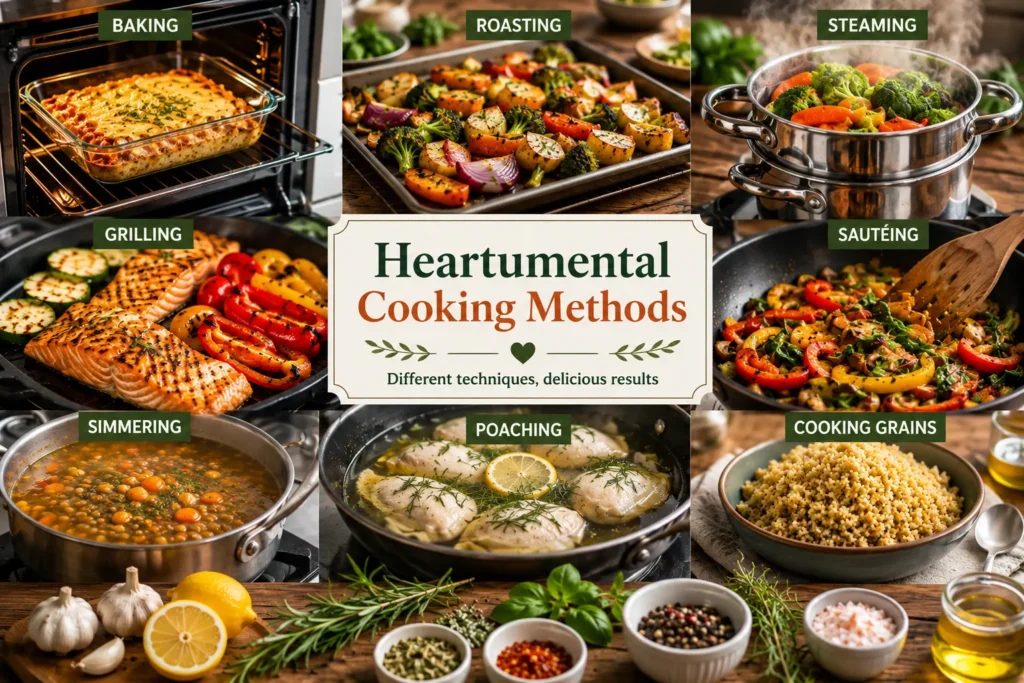
This guide to Heartumental cooking methods and techniques focuses on practical ways to prepare everyday foods. I’ll cover baking, roasting, steaming, grilling, sautéing, simmering, poaching, and other useful methods, along with tips for keeping meals flavorful without making them overly complicated.
You can use these techniques with vegetables, whole grains, beans, eggs, fish, poultry, and many other ingredients. If you are building meals from the wider [Heartumental recipe collection], this guide can also help you choose the right cooking method for each dish.
What Makes a Cooking Method Fit the Heartumental Approach?
There is no single cooking technique that defines this style of food. The bigger idea is to choose methods that let good ingredients keep their natural character while giving you plenty of room to add flavor.
I like starting with the ingredient rather than the cooking method. Tender vegetables may need only steaming, while firm vegetables such as carrots, potatoes, cauliflower, or squash can benefit from roasting.
Whole foods also give you plenty of options. You can bake fish, grill vegetables, sauté leafy greens, simmer lentils, roast chickpeas, or cook oats on the stovetop.
The amount of added fat matters too, but that does not mean meals need to be dry. Olive oil, nuts, seeds, avocado, yogurt-based sauces, herbs, spices, garlic, lemon, and vinegar can all add flavor and texture.
A useful approach is to think about five things:
| Goal | Useful techniques |
| Add browning | Roasting, grilling, sautéing |
| Keep food tender | Steaming, poaching, simmering |
| Build deep flavor | Roasting, braising, sautéing |
| Cook quickly | Stir-frying, sautéing, grilling |
| Prepare food in batches | Baking, roasting, simmering |
The best method depends on the ingredient, the texture you want, and the time you have.
The Main Heartumental Cooking Methods

1. Baking

Baking uses dry heat inside an oven. It works especially well for fish, poultry, vegetables, egg dishes, oats, stuffed vegetables, and homemade breakfast dishes.
I like baking when I want a meal that requires little attention after the ingredients go into the oven. You can season vegetables, place them on a sheet pan, add a protein source, and let the oven do most of the work.
For vegetables, spread the pieces in a single layer. Crowding the pan can trap moisture and make them softer instead of giving them the browned edges that make roasted vegetables so appealing.
Baking is also useful for make-ahead meals. A baked vegetable and egg dish, for example, can be prepared as part of breakfast or lunch preparation.
Best for:
- Fish fillets
- Chicken
- Vegetables
- Egg bakes
- Stuffed peppers
- Oat-based dishes
- Chickpeas
Technique tip: Dry ingredients well before baking when you want better browning. Season evenly and leave enough space between pieces.
2. Roasting

Roasting is one of my favorite methods for vegetables because it brings out a deeper flavor and creates a mix of soft centers and browned edges.
Good roasting vegetables include:
- Carrots
- Broccoli
- Cauliflower
- Bell peppers
- Brussels sprouts
- Sweet potatoes
- Zucchini
- Mushrooms
- Onions
- Squash
Cut vegetables into similar-sized pieces so they cook at roughly the same rate.
A small amount of olive oil can help seasoning stick and encourage browning. Garlic, paprika, cumin, black pepper, rosemary, thyme, or lemon can then take the flavor in different directions.
Roasted vegetables also work well for meal prep. I often prefer making extra because the leftovers can move into grain bowls, wraps, salads, soups, or breakfast bowls.
Technique tip: Avoid covering the vegetables during roasting if your goal is browning. Moisture needs room to escape.
3. Steaming

Steaming cooks food with hot vapor rather than placing it directly in water.
It works well for vegetables such as:
- Broccoli
- Green beans
- Carrots
- Spinach
- Cauliflower
- Peas
Steaming can be useful when you want vegetables that remain tender without becoming heavily browned.
The main challenge is seasoning. Because steaming does not create much browning, the final flavor often depends on what you add afterward.
Try lemon juice, fresh herbs, black pepper, garlic, toasted seeds, or a small amount of olive oil after cooking.
Technique tip: Avoid overcooking vegetables. Remove them when they become tender but still have some structure.
4. Grilling

Grilling adds direct heat and creates browning and charred edges.
It works well for:
- Fish
- Chicken
- Mushrooms
- Bell peppers
- Zucchini
- Eggplant
- Corn
- Tomatoes
- Whole-grain flatbreads
Grilling is especially useful when you want a strong flavor without relying on a heavy sauce.
A simple marinade can contain lemon juice, olive oil, garlic, herbs, and spices. For vegetables, a light coating of oil and seasoning may be enough.
I also like grilled vegetables in leftovers. A few pieces of grilled zucchini or pepper can make a basic grain bowl much more interesting the next day.
Technique tip: Preheat the grill and avoid moving food constantly. Let the surface develop color before turning it.
5. Sautéing

Sautéing cooks small pieces of food fairly quickly in a pan with a modest amount of cooking fat.
This is one of the most useful everyday techniques because it works for vegetables, eggs, mushrooms, beans, leafy greens, and many proteins.
A simple vegetable sauté can start with onion and garlic. Add firmer vegetables first, then softer vegetables and leafy greens later.
For example, bell peppers may need more time than spinach. Adding everything at once can leave one ingredient overcooked while another remains firm.
Technique tip: Cut ingredients according to their cooking time. Add slow-cooking ingredients first and quick-cooking ingredients later.
6. Simmering

Simmering uses gentle heat to cook food in liquid.
It is useful for:
- Lentils
- Beans
- Vegetable soups
- Tomato sauces
- Oatmeal
- Grain dishes
- Stews
A gentle simmer is different from a hard boil. You want the liquid to stay hot with small, steady bubbles rather than violent bubbling.
I like simmering for meals that benefit from time. Lentils, vegetables, herbs, and spices can develop a more connected flavor as they cook together.
Technique tip: Taste near the end of cooking and adjust seasoning gradually. This is easier than adding a large amount of salt at the beginning.
7. Poaching
Poaching cooks food gently in liquid that is kept below a full boil.
It can work well for eggs, fish, chicken, and fruit.
Poaching is useful when you want delicate ingredients to stay moist. The liquid can also carry flavor from ingredients such as lemon, garlic, herbs, onion, or spices.
For a simple breakfast, a poached egg can be served over whole-grain toast with avocado and tomatoes.
Technique tip: Keep the liquid gentle. Strong boiling can break delicate foods apart.
8. Stir-Frying
Stir-frying uses high heat and quick movement to cook small pieces of food.
The method works especially well for vegetables and can be combined with tofu, eggs, beans, chicken, or other proteins.
The key is preparation. Cut everything before you start cooking because the process moves quickly.
I like using combinations such as broccoli, bell peppers, mushrooms, spinach, and chickpeas. A small amount of garlic, ginger, lemon, or a simple homemade sauce can finish the dish.
Technique tip: Avoid filling the pan too much. Too many ingredients can lower the heat and cause steaming instead of quick browning.
Choosing the Right Method for Different Foods

Different ingredients respond better to different techniques. You do not need to memorize every rule, but this quick guide can make meal planning easier.
| Ingredient | Good methods | Useful flavor additions |
| Broccoli | Roasting, steaming, sautéing | Garlic, lemon, pepper |
| Carrots | Roasting, steaming, simmering | Cumin, herbs, lemon |
| Spinach | Sautéing, steaming | Garlic, lemon, pepper |
| Mushrooms | Roasting, sautéing, grilling | Garlic, thyme, pepper |
| Salmon | Baking, grilling, poaching | Lemon, herbs, garlic |
| Chicken | Baking, grilling, sautéing | Paprika, herbs, lemon |
| Lentils | Simmering | Cumin, garlic, herbs |
| Chickpeas | Roasting, simmering, sautéing | Paprika, cumin, lemon |
| Eggs | Poaching, sautéing, baking | Herbs, pepper, vegetables |
| Quinoa | Simmering | Herbs, lemon, vegetables |
| Brown rice | Simmering | Herbs, vegetables, spices |
| Oats | Simmering, overnight preparation | Fruit, cinnamon, nuts |
The same ingredient can also fit several meals. Cooked quinoa, for example, can become a breakfast bowl in the morning, a lunch salad later, and a dinner side.
How to Build Flavor Without Complicated Sauces
Good cooking does not require a long ingredient list.
I usually think about flavor in layers. Start with the ingredient itself, then add aromatics, seasoning, acidity, herbs, and texture.
Aromatics
Garlic, onion, ginger, scallions, and shallots can form the base of savory dishes.
Herbs
Fresh parsley, cilantro, basil, dill, rosemary, thyme, and mint can change the character of a meal without making the recipe complicated.
Spices
Cumin, paprika, turmeric, black pepper, cinnamon, oregano, and chili flakes can take simple ingredients in very different directions.
Acidity
Lemon juice, lime juice, and vinegar can brighten food, especially after cooking.
This is a useful trick when a meal tastes flat. Before adding more salt, try a small amount of lemon juice or vinegar.
Texture
Crunch matters too. Walnuts, almonds, pumpkin seeds, chia seeds, and toasted whole grains can add contrast to soft foods such as oatmeal, yogurt, soups, and roasted vegetables.
How to Cook With Less Added Salt
Reducing salt does not mean removing flavor.
The first step is to build flavor earlier with ingredients such as onion, garlic, herbs, spices, lemon, vinegar, and roasted vegetables.
For example, roasted cauliflower with garlic, cumin, lemon, and fresh herbs can have much more character than plain boiled cauliflower.
I also prefer tasting food before automatically adding more salt. Ingredients such as canned beans or prepared sauces may already contain sodium, so checking labels can help when you are trying to keep a meal less salty.
Use salt carefully rather than treating it as the only way to make food taste good.
For people who need a specific sodium target for medical reasons, individual advice from a qualified healthcare professional should take priority.
How to Use Healthy Fats in Cooking
Fats can contribute flavor, texture, and cooking performance.
Common choices in these meals include:
- Olive oil
- Avocado
- Walnuts
- Almonds
- Chia seeds
- Flaxseeds
- Pumpkin seeds
- Nut butters
The cooking method matters. A small amount of olive oil can help vegetables brown in a pan or oven, while avocado can provide creaminess in a toast or bowl without needing a heavy sauce.
Nuts and seeds are especially useful as toppings. Add them to oatmeal, yogurt, salads, grain bowls, or roasted vegetables for extra texture.
The goal is not to remove fat from every meal. Instead, choose ingredients that work well with the dish and use appropriate portions.
Cooking Techniques for Whole Grains

Whole grains can become the base of many meals.
Useful options include:
- Brown rice
- Quinoa
- Oats
- Barley
- Whole-grain bread
- Whole-grain wraps
Cooking quinoa
Rinse quinoa if needed according to the package directions, then cook it in water or another suitable liquid until the grains become tender and the liquid is absorbed.
Once cooked, let it rest briefly and fluff it with a fork.
I like preparing extra quinoa because it can be stored and used in several meals.
Cooking brown rice
Brown rice usually needs more cooking time than white rice, so it works well as a batch-cooking ingredient.
Use the package instructions because cooking ratios and times can vary by product.
Cooking oats
Rolled oats work well for quick stovetop oatmeal and overnight oats. Steel-cut oats take longer and have a firmer texture.
Both can be paired with fruit, nuts, seeds, yogurt, cinnamon, or savory ingredients.
Cooking Vegetables for Better Texture
One of the easiest ways to improve a meal is to stop treating all vegetables the same way.
Firm vegetables generally need more cooking time. Softer vegetables and leafy greens need less.
For a mixed roasted vegetable tray, cut dense vegetables into smaller pieces and softer vegetables into larger pieces when needed.
For sautéing, add onions and firm vegetables first. Add spinach, herbs, and other delicate ingredients later.
For steaming, check texture often rather than leaving vegetables unattended for too long.
The goal is not to make every vegetable extremely soft. A little bite can make a meal more enjoyable.
Cooking Beans, Lentils, and Chickpeas
Legumes are useful ingredients for breakfast bowls, soups, salads, wraps, curries, and grain-based meals.
Lentils
Lentils are well suited to simmering. They can become the base of soups, stews, curries, or warm grain bowls.
Different varieties have different textures, so follow the package directions for cooking.
Chickpeas
Cooked chickpeas can be:
- Added to salads
- Simmered in curries
- Roasted until crisp
- Added to grain bowls
- Mashed into spreads
Beans
Black beans, kidney beans, white beans, and other varieties can work in bowls, soups, wraps, and savory breakfast dishes.
If using canned beans, drain and rinse them when appropriate for the recipe.
How to Cook Fish Without Drying It Out
Fish often needs less cooking time than people expect.
Baking, grilling, steaming, and poaching can all work well. The right method depends on the type and thickness of the fish.
A simple combination of lemon, garlic, herbs, black pepper, and olive oil can provide plenty of flavor.
Avoid repeatedly cooking fish far beyond the point where it becomes tender. Use a reliable food thermometer and follow safe cooking guidance for the specific type of fish.
For a simple meal, pair baked fish with roasted vegetables and quinoa or brown rice.
How to Cook Eggs for Better Texture
Eggs can work in breakfast, lunch, or dinner.
For scrambled eggs, use moderate heat and stir gently. Adding vegetables before the eggs can help them soften and develop flavor.
For a baked egg dish, combine eggs with vegetables and herbs, then cook until the eggs are set.
Poached eggs work well over whole-grain toast, avocado, vegetables, or a grain bowl.
The key is to avoid treating eggs as a high-heat ingredient from start to finish. Gentle cooking usually gives you more control over the final texture.
One-Pan and Sheet-Pan Cooking
When I want a practical weeknight meal, one-pan cooking is often one of the easiest choices.
A sheet-pan dinner can combine:
- Fish or chicken
- Broccoli
- Carrots
- Bell peppers
- Onions
- Potatoes or another grain-based side
Cut ingredients according to their cooking times and give them enough space on the pan.
One-pan meals also make cleanup easier, which matters when you are cooking after a busy day.
You can use the same idea for breakfast by baking eggs with vegetables or preparing a tray of roasted vegetables for several meals.
No-Cook Techniques for Busy Days
Not every meal needs a stove or oven.
Some of the most useful preparation methods involve combining ready-to-eat ingredients.
Examples include:
- Greek yogurt with berries and walnuts
- Overnight oats
- Avocado toast
- Fruit and nut bowls
- Chickpea salads
- Hummus and vegetable wraps
- Grain bowls made from previously cooked grains
No-cook meals can be especially useful during hot weather or busy mornings.
I like keeping a few ingredients ready in the refrigerator so I can assemble a meal instead of starting from zero.
Make-Ahead Cooking Techniques
Batch cooking can reduce daily preparation time.
You can prepare several basic ingredients at once:
- Cook a batch of quinoa or brown rice.
- Roast a tray of vegetables.
- Wash and prepare leafy greens.
- Cook or portion beans and chickpeas.
- Prepare a simple yogurt or herb-based sauce.
- Portion nuts and seeds.
- Store ingredients separately so they can be combined in different meals.
This gives you flexibility.
For example, roasted vegetables can go into a lunch bowl, a dinner plate, a wrap, or an egg breakfast.
That is more useful than preparing seven identical meals that you may stop enjoying halfway through the week.
Cooking Method vs. Food Texture
The same ingredient can produce a very different result depending on how you prepare it.
| Method | Typical texture | Flavor profile |
| Steaming | Tender, moist | Clean and mild |
| Roasting | Tender inside, browned outside | Deep, sweet, savory |
| Grilling | Tender with charred edges | Smoky and bold |
| Sautéing | Tender with some browning | Savory and quick |
| Simmering | Soft and moist | Rich and blended |
| Baking | Tender and firm | Concentrated |
| Poaching | Soft and delicate | Mild and clean |
This is why cooking technique matters so much.
If you dislike steamed broccoli, for example, that does not mean you dislike broccoli. You may simply prefer the texture and flavor created by roasting it.
Easy Technique Swaps
You can often change the cooking method when a recipe does not suit your schedule.
| Original method | Possible alternative | When it helps |
| Roasting | Air frying or grilling | When you want faster browning |
| Sautéing | Steaming | When you want a softer, lighter preparation |
| Baking | Grilling | When suitable weather and equipment allow |
| Simmering | Pressure cooking | When you need faster preparation |
| Grilling | Baking | When outdoor cooking is not practical |
| Stovetop oats | Overnight oats | When you want a make-ahead breakfast |
Not every swap works perfectly for every ingredient. Consider the food’s moisture, thickness, cooking time, and desired texture before changing the method.
Common Cooking Mistakes to Avoid
Crowding the pan
Too many ingredients in one pan can trap moisture and reduce browning.
Cutting everything the same way
Different vegetables have different cooking times. Size should reflect how quickly each ingredient cooks.
Using high heat for everything
High heat can brown food quickly, but delicate ingredients may dry out or burn.
Overcooking vegetables
Vegetables do not always need to become very soft. Check them during cooking.
Adding seasoning only at the end
Some ingredients benefit from seasoning during cooking, while fresh herbs, citrus, and other finishing ingredients often work best at the end.
Forgetting acidity
A meal can have plenty of seasoning and still taste flat. Lemon juice or vinegar can sometimes provide the missing contrast.
Making every meal complicated
Simple cooking is often more practical. A well-seasoned piece of fish with roasted vegetables and a grain can make a complete meal without a long ingredient list.
How to Match Cooking Methods to Your Schedule
Your available time should influence the technique you choose.
| Available time | Good choices |
| 5–10 minutes | No-cook bowls, toast, yogurt bowls |
| 10–20 minutes | Sautéing, quick eggs, simple grain bowls |
| 20–30 minutes | Baking, grilling, roasting smaller portions |
| 30+ minutes | Roasting larger batches, soups, stews |
| Prep ahead | Overnight oats, cooked grains, roasted vegetables |
If I have very little time, I usually look for ingredients that are already cooked or require minimal preparation.
On a slower day, I can roast vegetables or prepare grains for several future meals.
This is one reason a flexible cooking system works better than treating every recipe as a completely separate task.
A Simple Cooking Framework
You can use this basic framework when creating meals without following a fixed recipe:
Choose a base → add vegetables → add protein → add healthy fat → finish with flavor.
For example:
Quinoa + roasted vegetables + chickpeas + avocado + lemon and herbs
Or:
Brown rice + sautéed spinach + salmon + olive oil + lemon
Or:
Whole-grain toast + egg + tomato + avocado + black pepper
Or:
Oats + Greek yogurt + berries + walnuts + cinnamon
The cooking method can change the character of the entire meal.
Roast the vegetables for a deeper flavor, steam them for a softer result, or sauté them with garlic when you want something faster.
How to Combine Cooking Methods in One Meal
You do not have to use one technique for everything.
A meal can combine several methods.
For example:
- Roast broccoli and carrots.
- Simmer lentils.
- Cook quinoa separately.
- Finish the bowl with fresh herbs and lemon.
Another dinner could use:
- Grilled chicken
- Steamed green beans
- Brown rice
- Homemade yogurt and herb sauce
Using several methods can create more variety in texture and flavor without requiring complicated recipes.
This is also useful when cooking for several people because each component can have a different texture.
Heartumental Cooking Methods for Meal Prep
Some techniques work especially well for batch cooking.
Roast vegetables in batches
A large sheet pan can provide vegetables for several meals.
Cook whole grains ahead
Quinoa and brown rice can form the base for bowls, salads, and other meals.
Prepare legumes
Cooked lentils, chickpeas, and beans can be portioned for later recipes.
Prepare sauces separately
Keep dressings and yogurt-based sauces separate until serving when possible. This helps prevent some foods from becoming soggy.
Keep fresh toppings separate
Fresh herbs, nuts, seeds, avocado, and citrus can be added just before eating.
For more detailed preparation ideas, a future Heartumental Meal Prep guide would make a useful supporting page in this cluster.
Final Thoughts
Good cooking does not require complicated techniques or a long list of ingredients. The method you choose can make simple foods taste very different.
I like thinking about cooking as a set of flexible tools. Roast vegetables when you want browning, steam them when you want tenderness, sauté ingredients when time is short, and simmer foods when you want flavors to come together slowly.
The best Heartumental cooking methods and techniques are the ones that help you prepare food you enjoy and can realistically make again. Start with a few methods you like, then build your recipes around them.
Frequently Asked Questions About Heartumental Cooking Methods
What cooking methods work well for this style of food?
Baking, roasting, steaming, grilling, sautéing, simmering, poaching, and stir-frying can all work well. The best choice depends on the ingredient and the texture you want.
Is roasting a good way to cook vegetables?
Yes. Roasting can create browned edges and deeper flavor. It works particularly well with firm vegetables such as carrots, cauliflower, broccoli, squash, and sweet potatoes.
Can I use olive oil for cooking?
Olive oil can be used in many cooking applications, including sautéing and roasting. The amount and method should fit the recipe.
Which method is best for fish?
Baking, grilling, steaming, and poaching can all work. Choose based on the type and thickness of the fish and the texture you prefer.
How can I make vegetables more flavorful?
Try roasting or sautéing them with garlic, herbs, spices, lemon, or a small amount of olive oil. Fresh toppings added after cooking can also make a big difference.
Is steaming better than roasting?
Neither method is automatically best for every meal. Steaming gives a tender result, while roasting creates browning and a deeper flavor.
How can I cook meals faster?
Use smaller pieces, quick-cooking ingredients, sautéing, stir-frying, or make-ahead components. Having cooked grains and vegetables ready can also cut preparation time.
Can the same cooking method be used for every meal?
You can, but variety usually makes meals more interesting. Changing between roasting, steaming, grilling, sautéing, and simmering gives you different textures and flavors.