Skip to content
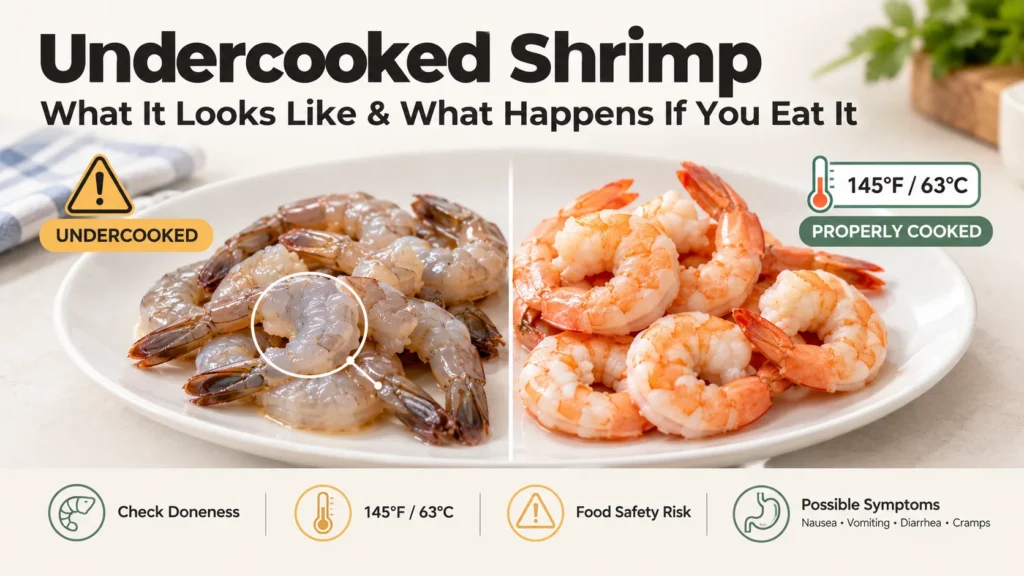
Undercooked shrimp can be hard to judge by appearance alone. You may notice a translucent center, a soft texture, or a grayish color and wonder if it is safe to eat.
If you already ate shrimp that may have been undercooked, it is also natural to worry about food poisoning. Eating raw or undercooked seafood can increase exposure to harmful germs, but it does not mean you will definitely become sick.
The safest approach is to cook shrimp thoroughly and use a food thermometer when possible.
Quick Answer: Is Undercooked Shrimp Safe to Eat?
Undercooked shrimp is not considered a safe choice because raw or partially cooked seafood can contain harmful microorganisms. The USDA lists 145°F (63°C) as the minimum internal temperature for fish and shellfish. The FDA also advises cooking most seafood to 145°F and says shrimp should become firm, pearly, and opaque.
If you already ate undercooked shrimp, do not assume that you will get sick. Monitor yourself for symptoms such as diarrhea, stomach cramps, nausea, vomiting, or fever. Foodborne illness symptoms vary based on the germ involved and may begin within hours or take several days or longer.
If severe symptoms develop, contact a healthcare professional or seek urgent medical care.
How to Tell If Shrimp Is Undercooked

Knowing how to tell if shrimp is undercooked can help you decide whether it needs more cooking. Appearance can provide useful clues, but a thermometer gives you a more reliable safety check.
Color
Raw shrimp can look gray, translucent, or slightly clear. As shrimp cooks, its flesh becomes more opaque and pearly.
The FDA says shrimp should have flesh that becomes firm, pearly, and opaque when cooked.
Color can vary based on the type of shrimp and how it was prepared, so do not use color alone to decide whether shrimp is safe.
Texture
Undercooked shrimp may feel soft, slippery, or unusually tender in the center.
Properly cooked shrimp should have firm flesh. A soft or glassy center can be a sign that the shrimp needs more cooking, but texture alone is not a substitute for checking temperature.
Transparency
A translucent or glassy-looking center is one of the easiest signs to notice.
Cutting into the thickest part can help you see whether the center remains clear or has become opaque. Still, this is a visual check rather than a complete food-safety test.
Shape
Shrimp often curl as they cook. However, the shape of a shrimp does not prove that it has reached a safe temperature.
A tightly curled shrimp can still need more cooking, while a less tightly curled shrimp may already be cooked. Use temperature and the other doneness signs together.
Internal Temperature
A food thermometer gives you a much better safety check than appearance alone.
For fish and shellfish, USDA guidance lists 145°F (63°C) as the minimum internal temperature. FDA guidance also recommends 145°F for most seafood, while noting that shrimp should become firm, pearly, and opaque.
What Does Undercooked Shrimp Look Like Inside?

The center of undercooked shrimp may look translucent, grayish, or glassy. Properly cooked shrimp should have an opaque, pearly appearance and firm flesh.
| Sign | Undercooked Shrimp | Properly Cooked Shrimp |
| Appearance | May look translucent or gray | Opaque and pearly |
| Texture | May be soft or underdone | Firm |
| Center | May remain glassy or translucent | Opaque |
| Temperature | Has not reached the recommended target | Reaches 145°F (63°C) |
| Shape | Shape alone is not a reliable test | Curling can occur during cooking |
The temperature check is the strongest safety measure in this comparison. Visual signs can support the check but should not replace it.
What Happens If You Eat Undercooked Shrimp?

If you eat undercooked shrimp, you may be exposed to bacteria or other microorganisms that can cause foodborne illness. Raw or undercooked seafood carries a greater food-safety concern than properly cooked seafood.
One example is Vibrio. CDC says people can develop vibriosis after eating raw or undercooked shellfish, with symptoms that can include watery diarrhea, stomach cramps, nausea, vomiting, and fever.
Other foodborne germs can cause similar symptoms. That is why symptoms alone cannot tell you which organism caused an illness.
Eating one piece of undercooked shrimp also does not mean you will definitely develop food poisoning. The outcome depends on factors such as whether harmful microorganisms were present and the individual’s susceptibility.
Symptoms You May Experience After Eating Undercooked Shrimp
Food poisoning symptoms depend on the germ involved. Common symptoms include:
- Nausea
- Vomiting
- Diarrhea
- Stomach pain or cramps
- Fever
Some illnesses can also cause chills, headache, or other symptoms. CDC notes that symptoms can range from mild to serious and that the exact symptoms depend on the germ involved.
Do not assume that a particular symptom means you have Vibrio, Salmonella, or another specific infection. A healthcare professional may need to evaluate persistent or severe symptoms.
How Long After Eating Undercooked Shrimp Can You Get Sick?

There is no single timeline for food poisoning after eating undercooked shrimp.
The time between eating contaminated food and developing symptoms depends on the specific germ or cause. CDC says some foodborne illnesses can begin within a few hours, while others take several days. FDA notes that foodborne illness symptoms can sometimes occur much later.
Feeling fine shortly after eating undercooked shrimp does not prove that you cannot become sick later.
If symptoms develop, keep track of when they started and how they change. This information can be useful if you need to speak with a healthcare professional.
What Should You Do If You Ate Undercooked Shrimp?

If you think you ate undercooked shrimp, there is no need to assume the worst. Instead, pay attention to how you feel and watch for signs of illness.
- Stay calm. Eating undercooked shrimp can increase foodborne illness risk, but illness is not guaranteed.
- Monitor for symptoms. Watch for diarrhea, vomiting, nausea, stomach cramps, or fever.
- Drink fluids if symptoms develop. Vomiting and diarrhea can cause dehydration, so replacing lost fluids is important.
- Watch for dehydration. Reduced urination, dry mouth, and dizziness when standing can be warning signs.
- Contact a healthcare professional if symptoms are severe or persistent.
- Tell the healthcare professional that you recently ate undercooked seafood if you become ill. This information may help with the assessment.
Do not take antibiotics or other prescription medicines based only on information from an online article. Treatment depends on the cause and severity of the illness.
When Should You Seek Medical Help?

Most food poisoning is mild, but some cases require medical attention.
CDC recommends seeking medical help for signs such as:
- Bloody diarrhea
- Diarrhea lasting more than three days
- A fever above 102°F
- Vomiting so often that you cannot keep liquids down
- Signs of dehydration, such as very little urination, dry mouth, or dizziness when standing
Seek urgent medical attention for severe symptoms such as difficulty breathing, confusion, severe weakness, or rapidly worsening illness.
People at higher risk of serious foodborne illness include adults 65 and older, children under 5, pregnant people, and people with weakened immune systems.
If you fall into one of these groups and become ill after eating undercooked seafood, contacting a healthcare professional is especially important.
Can You Cook Undercooked Shrimp Again?
Yes, shrimp that is still being prepared can generally be returned to the heat and cooked thoroughly.
If you notice that the shrimp remains translucent or underdone, continue cooking it until it reaches the recommended safe temperature. A food thermometer provides the clearest check.
The situation is different if the shrimp has been left at unsafe temperatures for too long. FDA recommends refrigerating or freezing seafood and other perishable foods within two hours, or within one hour when the temperature is above 90°F.
Cooking should not be treated as a way to rescue seafood that has already been badly mishandled or spoiled.
What Temperature Should Shrimp Reach?

For fish and shellfish, USDA lists 145°F (63°C) as the minimum internal temperature.
FDA guidance also says most seafood should reach 145°F. For shrimp specifically, it describes properly cooked flesh as firm, pearly, and opaque.
When using a thermometer, place the probe into the thickest part of the shrimp. For very small shrimp, getting an accurate reading can be difficult, so use the thermometer together with the visual signs of doneness.
Cooking time alone is less reliable because shrimp vary in size, starting temperature, cooking method, and equipment.
Undercooked vs Properly Cooked Shrimp

The easiest way to remember the difference is:
Undercooked: translucent or glassy center, soft texture, and below the recommended cooking temperature.
Properly cooked: firm, pearly, opaque flesh and a safe internal temperature.
If you are unsure, give the shrimp more cooking time and check the temperature rather than relying on color alone.
How to Prevent Undercooked Shrimp

A few basic habits can reduce the risk of undercooked shrimp and other seafood-related foodborne illness.
- Use a food thermometer when practical.
- Cook shrimp thoroughly.
- Keep raw seafood away from ready-to-eat foods.
- Wash your hands after handling raw seafood.
- Clean cutting boards, utensils, counters, and other surfaces that touch raw seafood.
- Thaw frozen shrimp in the refrigerator, in cold water, or in the microwave when it will be cooked immediately afterward.
- Refrigerate seafood promptly.
- Do not leave perishable seafood at room temperature for extended periods.
- Do not rely only on smell, color, or texture to establish food safety.
FDA recommends keeping raw seafood separate from foods that will be eaten without further cooking.
Common Misconceptions About Undercooked Shrimp
Myth: Pink shrimp automatically means they are fully cooked.
Fact: Color can help you judge doneness, but it is not enough on its own. Temperature provides a stronger safety check. FDA describes cooked shrimp as firm, pearly, and opaque.
Myth: If shrimp smells fine, it is safe to eat raw or undercooked.
Fact: A normal smell does not prove that seafood is free of harmful microorganisms. Food can contain germs without obvious changes in smell or appearance.
Myth: Freezing always makes raw shrimp safe.
Fact: Freezing can control certain parasite risks in specific seafood products, but FDA states that freezing does not kill all harmful germs. Cooking seafood remains the safest approach.
Myth: One undercooked shrimp will definitely cause food poisoning.
Fact: Undercooked seafood can increase exposure to harmful microorganisms, but illness is not guaranteed after every exposure.
Myth: Cooking time alone tells you when shrimp is safe.
Fact: Shrimp size, cooking method, starting temperature, and equipment can affect cooking time. Internal temperature is a more useful safety measure.
Recovery and What to Expect
If foodborne illness develops, the course can vary widely.
CDC says symptoms may last from several hours to several days, depending on the germ involved. Some infections can be more serious and require medical care.
If you develop vomiting or diarrhea, focus on replacing lost fluids and monitor for dehydration. If symptoms become severe, last longer than expected, or include blood in the stool, high fever, frequent vomiting, or significant dehydration, contact a healthcare professional.
Do not use an online article to diagnose the cause of your symptoms.
When NOT to Google
Stop searching for answers online and seek medical help if you have:
- Trouble breathing
- Confusion or severe weakness
- Severe or worsening abdominal pain
- Bloody diarrhea or vomit
- Frequent vomiting that prevents you from keeping fluids down
- Signs of serious dehydration
- A high fever, especially above 102°F
- Symptoms that are severe or rapidly getting worse
If you are pregnant, 65 or older, under 5, or have a weakened immune system, contact a healthcare professional promptly if you become ill after eating undercooked seafood. These groups have a higher risk of serious foodborne illness.
Frequently Asked Questions
Can you eat slightly undercooked shrimp?
It is safest to avoid shrimp that has not been properly cooked. Raw or undercooked seafood can contain harmful microorganisms, so cook shrimp thoroughly rather than relying on the phrase “slightly undercooked.”
What happens if you eat undercooked shrimp?
You may have no symptoms, or you may develop foodborne illness. Possible symptoms include diarrhea, stomach cramps, nausea, vomiting, and fever. The cause and timing can vary.
How can you tell if shrimp is undercooked?
Look for a translucent or glassy center and a soft texture. Properly cooked shrimp should become firm, pearly, and opaque. A food thermometer gives you a more reliable safety check.
What does undercooked shrimp look like?
Undercooked shrimp can remain translucent or grayish in the center. Fully cooked shrimp becomes opaque and pearly, with firm flesh.
How long after eating undercooked shrimp can you get sick?
There is no single answer. Different foodborne germs have different incubation periods. Some illnesses begin within hours, while others can take days or longer.
Can undercooked shrimp cause food poisoning?
Yes. Raw or undercooked seafood can expose people to harmful microorganisms that cause foodborne illness. Vibrio is one example associated with raw or undercooked shellfish.
Can you cook shrimp again if it is undercooked?
If the shrimp is still being safely handled and has not been left at unsafe temperatures, you can return it to the heat and cook it thoroughly. Use a food thermometer when possible.
What temperature should shrimp reach?
USDA lists 145°F (63°C) as the minimum internal temperature for fish and shellfish. FDA also recommends 145°F for most seafood and describes cooked shrimp as firm, pearly, and opaque.
Can freezing shrimp make it safe to eat raw?
Freezing does not eliminate every food-safety concern. FDA says freezing can kill some parasites in certain seafood, but it does not kill all harmful germs. Cooking remains the safest approach.
How do you know when shrimp is fully cooked?
Properly cooked shrimp should have firm, pearly, opaque flesh. For the most reliable safety check, use a food thermometer and follow the recommended internal temperature.