Skip to content
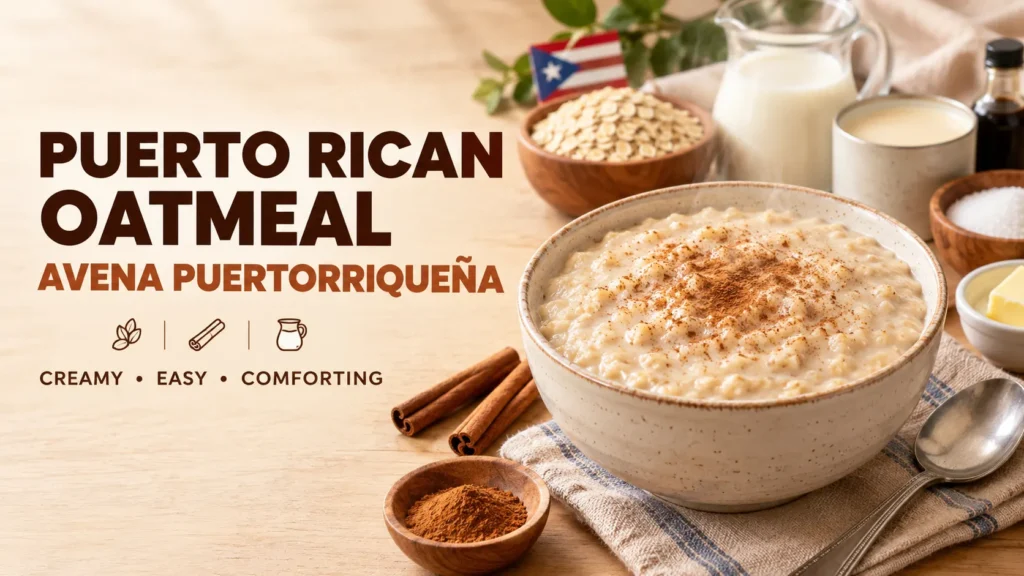
Puerto Rican oatmeal, also called avena, is a creamy oatmeal made with oats, milk or evaporated milk, cinnamon, sugar, salt, and a little margarine. It is simple to make, but the oat type and cooking method can make a big difference in the final texture.
If you are searching for Puerto Rican avena or Spanish oatmeal, this guide explains what the dish means, how to make it, which oats work best, and how to adjust the recipe to your taste.
Quick Answer: What Is Puerto Rican Oatmeal?
Puerto Rican oatmeal is a creamy oatmeal preparation commonly known as avena. A basic version uses oats cooked with milk or evaporated milk, sugar, cinnamon, salt, and margarine.
The texture can be smoother than a standard bowl of oatmeal, especially when fine or instant oats are used. A Puerto Rican oatmeal recipe can also be adjusted with different milk choices, sweetness levels, and oat textures.
The recipe below is based on a version that uses 1¾ cups of milk or evaporated milk and 1 cup of oats. The original recipe also uses a dash of salt, 1 tablespoon of margarine, sugar to taste, and ground cinnamon to taste.
Puerto Rican Oatmeal Recipe
Ingredients

- 1¾ cups milk or evaporated milk
- 1 cup oats
- 1 dash of salt
- 1 tablespoon margarine
- Sugar, to taste
- Ground cinnamon, to taste
The original recipe gives you a choice between regular milk and evaporated milk. Evaporated milk gives the oatmeal a richer milk flavor, while regular milk keeps the recipe simple.
Sugar and cinnamon are listed to taste, so you can adjust both based on how sweet and cinnamon-forward you like your oatmeal.
What Type of Oats Should I Use?

The type of oats you choose affects the texture more than many people expect.
Instant oats: These are a strong choice if you want very soft, creamy avena. A Puerto Rican avena recipe from Food Metamorphosis specifically uses instant oats and links their fine texture with a creamy result.
Quick oats: These cook fairly quickly and give you a soft texture. They are a useful middle ground if you want creamy oatmeal without using instant oats.
Rolled oats: These have larger flakes and give the finished oatmeal more texture. They can work, but the result may be less smooth. Another Puerto Rican-style recipe uses rolled oats and cooks them longer than instant oats.
Steel-cut oats: These need a much longer cooking process and have a chewier texture. They are not the easiest choice if your goal is soft, creamy avena.
If you prefer a smoother texture but only have larger rolled oats, you can pulse them briefly in a blender or food processor. The supplied competitor also recommends grinding oats when they do not produce the desired Puerto Rican-style texture.
How to Make Puerto Rican Avena

- Heat the milk. Add the milk or evaporated milk to a medium saucepan.
- Add the flavorings. Add the salt, margarine, sugar, and ground cinnamon.
- Bring the mixture to a boil. Keep an eye on the milk as it heats so it does not boil over.
- Add the oats. Lower the heat to medium, then stir in the oats.
- Keep stirring. Stir regularly as the oats cook. Frequent stirring helps the mixture cook evenly and helps prevent lumps.
- Check the texture. Continue cooking until the oats are tender and the oatmeal reaches the thickness you want.
- Adjust if needed. If it becomes thicker than you prefer, stir in a little extra milk. If it is too thin, continue cooking gently for a little longer.
- Serve warm. Spoon the avena into bowls and add a little extra cinnamon if you like.
The original recipe uses a 15-minute total cooking time, but the exact time can change with the type of oats used. Its instructions call for lowering the heat after the milk mixture boils and then cooking the oats until done.
What Does Avena Mean?
Avena is the Spanish word for oats. In food, the word can also refer to an oat-based preparation such as oatmeal.
That does not mean there is one single recipe called avena across every Spanish-speaking country. Oat dishes can vary by country, household, ingredients, and cooking method.
For Puerto Rican oatmeal, avena, Puerto Rican avena, and avena puertorriqueña are useful names for the dish.
If you searched for oatmeal in Spanish, you may also see the word avena used in other types of oat recipes. The word itself does not identify one specific Puerto Rican preparation.
Is Spanish Oatmeal the Same as Puerto Rican Oatmeal?
Not exactly.
Spanish oatmeal can be a broad search term for oatmeal described in Spanish or associated with Spanish-speaking food traditions. Puerto Rican oatmeal is more specific and refers to the Puerto Rican-style preparation known as avena.
So if you search for Puerto Rican avena, you are looking for a specific regional style. If you search for Spanish oatmeal, you may find a wider mix of recipes.
This distinction matters because Spanish-speaking countries do not all prepare oats in the same way. The milk, oat type, sweetener, spices, and texture can vary.
For this recipe, the focus is Puerto Rican avena rather than oatmeal from Spain or a general Spanish-language oatmeal recipe.
What Makes Puerto Rican Oatmeal Different?
The main difference is the way the oatmeal is prepared and the texture people are looking for.
A creamy bowl of Puerto Rican oatmeal can be made with fine oats, milk or evaporated milk, cinnamon, sugar, salt, and margarine. Instant oats are especially useful when you want a soft texture.
Milk also affects the result. The supplied Puerto Rican recipe specifically uses either milk or evaporated milk.
Cinnamon adds warmth, while sugar controls the sweetness. A little salt helps balance the other flavors without making the oatmeal taste salty.
The cooking process matters too. Stirring while the oats cook helps create an even mixture and reduces the chance of lumps.
Puerto Rican Avena vs Other Latin American Oatmeal
There is no single oatmeal recipe shared by every Latin American country. Recipes change from place to place.
| Style | What can vary |
| Puerto Rican avena | Often prepared as a creamy oatmeal with milk or evaporated milk, cinnamon, sugar, and oats |
| Other Latin American oat preparations | May use different milks, sweeteners, spices, oat textures, or cooking methods |
| Spanish-language oatmeal recipes | Can refer to many different oat dishes rather than one fixed recipe |
That is why it is better to describe this dish specifically as Puerto Rican oatmeal or avena puertorriqueña rather than treating every Spanish-speaking oatmeal recipe as the same dish.
Best Milk for Puerto Rican Oatmeal

The original recipe gives you two main choices: regular milk or evaporated milk.
Whole milk
Whole milk gives the oatmeal a fuller, richer texture and flavor than lower-fat milk.
2% milk
You can use 2% milk if that is what you keep at home. It will still work, though the finished oatmeal may feel a little lighter.
Evaporated milk
Evaporated milk is specifically included in the supplied Puerto Rican avena recipe. It gives the oatmeal a richer milk flavor without requiring you to add another ingredient.
Oat milk
Oat milk can be used as a dairy-free alternative. It may add a mild oat flavor and can work well in a creamy breakfast bowl.
Almond milk
Almond milk can also replace dairy milk. The flavor will be different, so choose an unsweetened version if you want more control over the sugar.
Coconut milk
Coconut milk can give the oatmeal a noticeable coconut flavor. Treat this as an optional variation rather than a required part of the basic recipe.
How to Make Puerto Rican Oatmeal Thicker or Thinner

Oatmeal continues to thicken as it sits, so check the consistency before making a big adjustment.
If your oatmeal is too thick
Stir in a small amount of milk while the oatmeal is still warm. Add it gradually until you reach the texture you want.
If your oatmeal is too thin
Keep cooking it gently and stir regularly. The oats will absorb more liquid as they cook.
You can also let the finished oatmeal sit for a short time before serving. It will usually become thicker as it cools.
If you use instant oats, expect a softer and creamier texture than you would get from large rolled oats.
Common Puerto Rican Oatmeal Problems
Why is my avena lumpy?
Lumps can form when the oats are not mixed evenly with the hot milk.
Stir regularly as the oats cook. If you want a very smooth result, use instant oats or pulse larger oats briefly in a blender or food processor.
Why did my oatmeal burn?
Milk can scorch when the heat is too high or the mixture sits without enough stirring.
Once the milk mixture reaches a boil, lower the heat before adding the oats. Keep stirring during cooking and avoid leaving the saucepan unattended.
Why is my Puerto Rican oatmeal too thick?
Add a little milk and stir it through while the oatmeal is warm. Add small amounts until the texture is right.
Also keep in mind that oatmeal thickens as it cools.
Why is it too thin?
Continue cooking over gentle heat while stirring. Give the oats time to absorb the liquid before adding more ingredients.
Can I use rolled oats?
Yes. Rolled oats can be used, but they will give you more texture than fine or instant oats. They may also need more cooking time.
If you want a smoother result, grind the rolled oats briefly before cooking.
Can I use evaporated milk?
Yes. Evaporated milk is one of the milk options in the supplied Puerto Rican avena recipe.
Can I make it less sweet?
Yes. Since the sugar is added to taste, simply start with less and add more only if needed.
This is one of the easiest parts of the recipe to adjust because the sweetness does not have to be fixed in advance.
How to Serve Puerto Rican Avena

Serve the oatmeal warm, with extra ground cinnamon if you like.
A little extra milk can loosen the texture if the avena becomes too thick. Toast or buttered bread can also be served alongside a bowl of oatmeal, while coffee is another breakfast pairing that appears with Puerto Rican avena recipes.
Fruit can be added if you enjoy it, but it is optional. You do not need a long list of toppings to make this breakfast work.
For a simple bowl, I recommend keeping the focus on the creamy oats, cinnamon, and milk.
How to Store and Reheat Puerto Rican Oatmeal

If you have leftover avena, transfer it to a covered container and refrigerate it promptly.
The USDA recommends refrigerating perishable leftovers within two hours and using refrigerated leftovers within 3 to 4 days.
The oatmeal will become thicker after chilling. That is normal.
When reheating, add a little milk and stir as it warms. This helps loosen the oatmeal and bring back a creamier texture.
For longer storage, the USDA says leftovers can be frozen for 3 to 4 months, although texture and quality can decline over time.
A Short Cultural Note About Puerto Rican Avena
Avena appears as a breakfast food in Puerto Rican recipes and menus. Puerto Rican recipe sources describe it as a creamy oatmeal, and Puerto Rican food businesses also list avena among their hot breakfast cereals.
The dish also has room for household variation. Some recipes use instant oats, while others use rolled oats, and milk choices can vary.
That is useful to keep in mind if you find another Puerto Rican oatmeal recipe that looks a little different from this one. There does not need to be one fixed ingredient list for every home or recipe.
Final Thoughts
Puerto Rican oatmeal is a simple dish, but small choices can change the result. If you want soft, creamy Puerto Rican avena, pay close attention to the oats, milk, heat, and stirring.
The basic recipe uses milk or evaporated milk, oats, salt, margarine, sugar, and cinnamon. From there, you can adjust the sweetness and consistency to suit your taste.
If you came here looking for Spanish oatmeal, the key point is that avena is the Spanish word associated with oats, while this particular recipe is a Puerto Rican-style preparation. Start with fine oats for a smoother bowl, stir regularly, and adjust the milk at the end if the oatmeal becomes too thick.
Puerto Rican Oatmeal FAQs
Is Puerto Rican oatmeal the same as avena?
Yes. In this context, Puerto Rican oatmeal is commonly called avena. Puerto Rican avena and avena puertorriqueña are useful names for the same general dish.
Can I make Puerto Rican oatmeal without dairy?
Yes. You can replace dairy milk with a plant-based milk such as oat or almond milk. The flavor and texture may change depending on the product you choose.
Can I use brown sugar?
Yes. Brown sugar can replace white sugar if you prefer its deeper flavor. Start with a small amount and adjust the sweetness to your taste.
Can I make avena ahead of time?
Yes. You can prepare it ahead and refrigerate it safely. It will thicken as it chills, so add a little milk while reheating to loosen it.
Can I use rolled oats?
Yes. Rolled oats work, but the finished oatmeal will usually have more texture than oatmeal made with fine or instant oats.
Is avena gluten-free?
Oats themselves do not contain wheat, but people who need to avoid gluten should check the product label and choose oats that are certified gluten-free when needed because cross-contact can occur during processing.
Can I freeze Puerto Rican oatmeal?
Yes, cooked oatmeal can be frozen. The USDA says frozen leftovers can be kept for 3 to 4 months, although quality can decline over time.