Skip to content
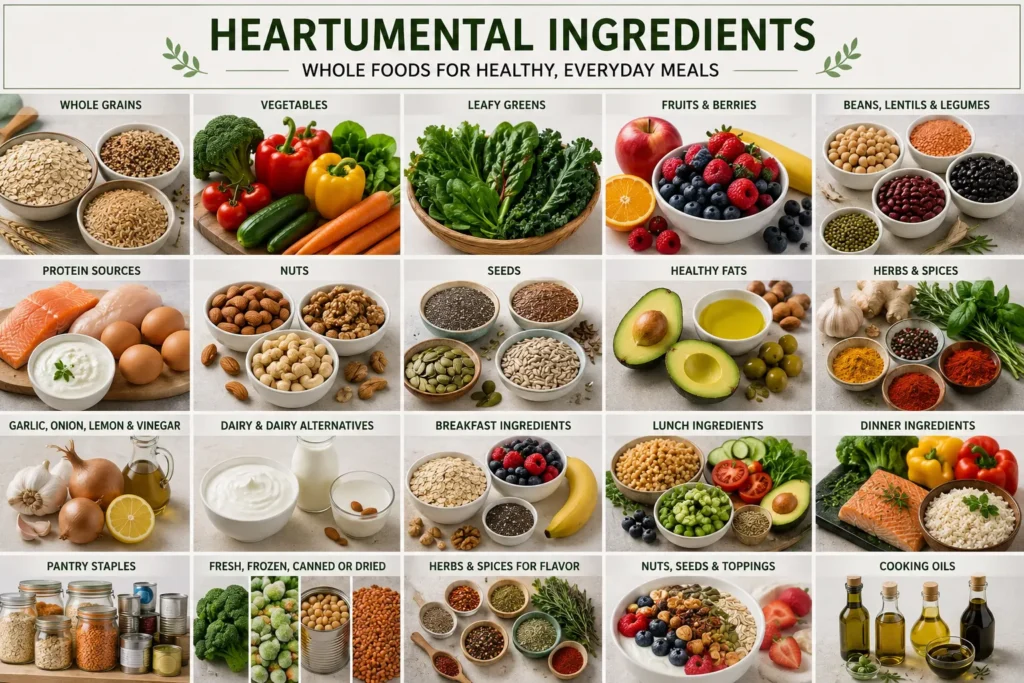
The ingredients you choose can shape the taste, texture, and flexibility of a meal. A good kitchen does not need dozens of specialty products. With a small selection of whole grains, vegetables, fruit, legumes, protein sources, nuts, seeds, herbs, spices, and cooking oils, you can build many different meals.
This Heartumental ingredients guide focuses on what to keep in your kitchen, how to use each ingredient, and how to combine them without making meals feel repetitive. I’ll cover everyday staples such as oats, quinoa, brown rice, beans, lentils, leafy greens, berries, eggs, fish, Greek yogurt, avocado, nuts, seeds, and olive oil.
The goal is simple: give you a practical ingredient system that works across breakfast, brunch, lunch, and dinner.
What Makes an Ingredient Fit the Heartumental Approach?
There is no single approved ingredient list. The approach works better as a flexible way to build meals around a variety of whole and minimally processed foods.
A useful starting point is to include several food groups across your meals. Whole grains can provide a base, vegetables and fruit can add color and texture, while beans, lentils, eggs, fish, poultry, yogurt, nuts, and seeds can provide different sources of protein and other nutrients.
I also like keeping flavor ingredients close at hand. Garlic, lemon, herbs, spices, vinegar, and olive oil can turn basic ingredients into very different dishes.
For example, the same cooked quinoa can become a breakfast bowl with berries and yogurt, a lunch bowl with chickpeas and vegetables, or a dinner side with roasted vegetables and herbs.
This flexibility matters. You do not need to follow a rigid ingredient formula every day.
A practical kitchen can be built around:
- Whole grains
- Vegetables
- Fruits
- Beans and lentils
- Protein foods
- Nuts and seeds
- Healthy fats
- Herbs and spices
- Simple flavor builders
The best choices also depend on your budget, culture, preferences, allergies, dietary needs, and the foods available where you live.
Whole Grains for Everyday Meals

Whole grains can serve as the base of many meals. They can be prepared in advance and combined with different ingredients throughout the week.
Oats
Rolled oats are useful for oatmeal, overnight oats, breakfast bars, and breakfast bowls.
I like oats because they work with both sweet and savory flavors. Berries, apples, cinnamon, walnuts, and yogurt create a sweet combination, while cooked vegetables, eggs, herbs, and spices can take oats in a savory direction.
Steel-cut oats have a firmer texture and generally need more cooking time. Rolled oats are often more convenient for quick breakfasts.
Quinoa
Quinoa works well in grain bowls, salads, breakfast bowls, and side dishes.
Cooked quinoa can be paired with chickpeas, spinach, tomatoes, avocado, herbs, and lemon for a savory meal. It can also be combined with apple, berries, cinnamon, yogurt, and walnuts for a breakfast bowl.
Brown Rice
Brown rice works well with beans, lentils, vegetables, fish, chicken, eggs, and homemade sauces.
I often find it useful for batch cooking because one cooked grain can support several meals.
Other Whole-Grain Choices
Depending on your preferences, you can also use:
- Barley
- Bulgur
- Whole-grain bread
- Whole-grain wraps
- Whole-grain pasta
- Whole-grain flatbreads
You do not need to eat the same grain every day. Changing the base can make familiar meals feel different.
Vegetables and Leafy Greens

Vegetables are among the most flexible ingredients in the kitchen.
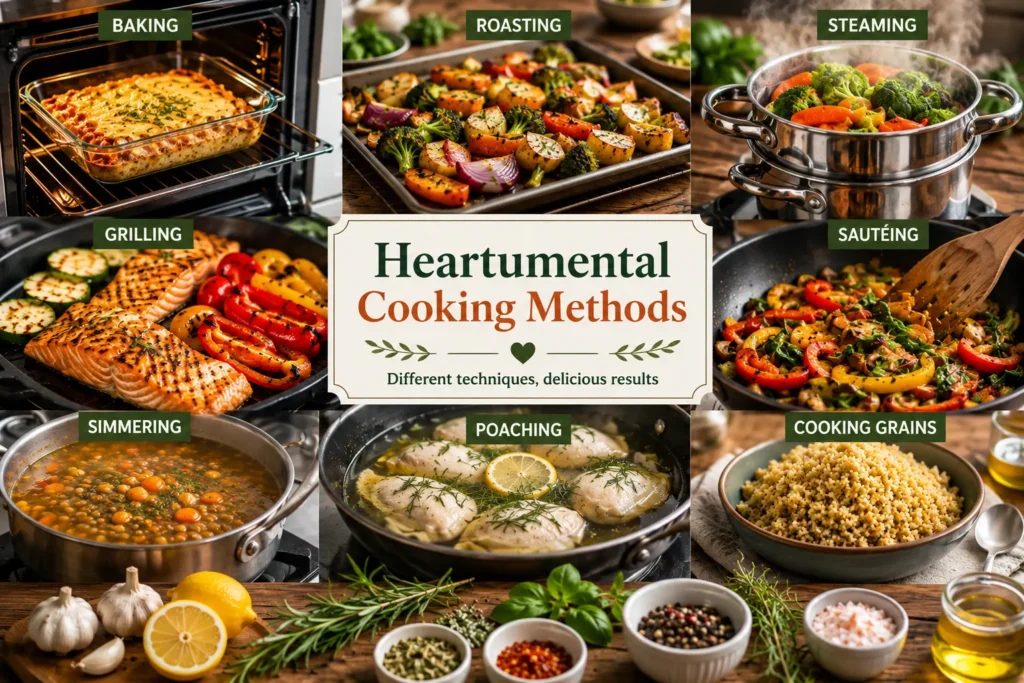
You can roast, steam, sauté, grill, bake, simmer, or eat many of them raw. This makes vegetables useful across almost every meal category.
Leafy Greens
Good options include:
- Spinach
- Kale
- Swiss chard
- Romaine
- Arugula
- Collard greens
Spinach can be added to eggs, soups, grain bowls, smoothies, wraps, and sautéed vegetable dishes.
Romaine and arugula work well in salads and sandwiches, while heartier greens can be cooked into soups and stews.
Cruciferous Vegetables
Broccoli, cauliflower, Brussels sprouts, and cabbage can take strong flavors well.
Roasting can give them browned edges, while steaming keeps them softer and milder.
Try combining roasted cauliflower with chickpeas, quinoa, lemon, cumin, and fresh herbs for a simple bowl.
Colorful Vegetables
Keep a mix of vegetables such as:
- Bell peppers
- Tomatoes
- Carrots
- Zucchini
- Eggplant
- Mushrooms
- Onions
- Sweet potatoes
Different colors often bring different flavors and textures to the plate.
Frozen Vegetables
Frozen vegetables can also be useful.
They are convenient for soups, stir-fries, egg dishes, grain bowls, and quick side dishes. You do not need to rely only on fresh produce to prepare useful meals.
Fruits and Berries

Fruit can add natural sweetness, acidity, moisture, and color.
Berries
Blueberries, strawberries, raspberries, and blackberries work well with:
- Oats
- Greek yogurt
- Chia seeds
- Flaxseeds
- Walnuts
- Almonds
- Whole-grain breakfast dishes
Fresh or frozen berries can work depending on the recipe.
Apples
Apples are useful in oatmeal, yogurt bowls, salads, snacks, and baked dishes.
Try diced apple with oats, cinnamon, walnuts, and chia seeds for a simple breakfast combination.
Bananas
Bananas work well in smoothies, oatmeal, yogurt bowls, and homemade breakfast mixtures.
A ripe banana can also add sweetness to recipes without needing a large amount of added sugar.
Seasonal Fruit
You can rotate fruit based on what is available.
Depending on the season and location, useful choices may include:
- Peaches
- Pears
- Oranges
- Melons
- Grapes
- Plums
- Mangoes
Using seasonal produce can also give your meals more variety.
Beans, Lentils, and Chickpeas

Legumes are useful because they can fit into many different types of meals.
Chickpeas
Chickpeas can be:
- Added to salads
- Roasted
- Mashed into spreads
- Added to grain bowls
- Cooked into curries
- Used in wraps
Roasted chickpeas can add crunch to a salad or grain bowl.
Lentils
Lentils work particularly well in soups, curries, stews, salads, and warm grain bowls.
Red lentils often become soft and creamy during cooking, while green or brown lentils can hold more of their shape.
Beans
Black beans, kidney beans, cannellini beans, and other varieties can work in:
- Grain bowls
- Soups
- Wraps
- Salads
- Breakfast bowls
- Vegetable stews
Canned beans can save time. Check the label if you are watching sodium, and rinse canned beans when appropriate for the recipe.
Protein Sources

Protein can come from both animal and plant foods.
Useful options include:
- Eggs
- Fish
- Chicken
- Greek yogurt
- Beans
- Lentils
- Chickpeas
- Tofu
- Nuts
- Seeds
The best choice depends on the meal.
Eggs can work at breakfast, while salmon or chicken may fit a dinner plate. Beans, lentils, and chickpeas can move between breakfast, lunch, and dinner with very little effort.
Eggs
Eggs can be scrambled with spinach and tomatoes, baked with vegetables, poached over whole-grain toast, or added to a grain bowl.
Fish
Fish such as salmon, sardines, trout, and other varieties can be baked, grilled, steamed, or poached.
Simple seasoning often works well. Lemon, garlic, black pepper, dill, parsley, and other herbs can provide plenty of flavor.
Greek Yogurt
Plain Greek yogurt works well in breakfast bowls, smoothies, sauces, and snacks.
It can be combined with fruit, oats, chia seeds, flaxseeds, and walnuts for a quick morning meal.
For savory uses, mix it with herbs, lemon, garlic, or spices to make a simple sauce.
Nuts and Seeds

Nuts and seeds can add crunch and make simple meals more interesting.
Useful choices include:
| Ingredient | Good uses |
| Walnuts | Oatmeal, yogurt, salads, bowls |
| Almonds | Breakfast bowls, snacks, salads |
| Chia seeds | Overnight oats, yogurt, smoothies |
| Flaxseeds | Oatmeal, smoothies, yogurt |
| Pumpkin seeds | Salads, soups, bowls |
| Sunflower seeds | Salads, grain bowls, snacks |
| Sesame seeds | Vegetables, wraps, grain bowls |
I like keeping a few options available rather than buying every type at once.
Use them as toppings, mix them into recipes, or combine them with fruit and yogurt for a quick snack.
If you use nut butters, check the ingredient list and choose a product that fits your preferences.
Healthy Fats and Cooking Oils
Fat can add flavor and help create satisfying textures.
Common ingredients include:
- Olive oil
- Avocado
- Nuts
- Seeds
- Nut butters
Olive oil can be useful for sautéing, roasting, dressings, and marinades.
Avocado works well in toast, salads, grain bowls, wraps, and breakfast dishes.
Nuts and seeds can be used as toppings, while nut butters can work in oatmeal, smoothies, or whole-grain toast.
The amount matters too. A little oil can be enough for cooking or dressing a dish.
For a detailed look at different oils and their cooking uses, a future Heartumental Cooking Oil Guide would make a useful supporting page in this cluster.
Herbs and Spices for Better Flavor

A good ingredient collection needs more than vegetables and grains.
Herbs and spices help you create different flavors from the same basic foods.
Fresh Herbs
Useful choices include:
- Parsley
- Cilantro
- Basil
- Dill
- Mint
- Rosemary
- Thyme
Fresh herbs work particularly well as finishing ingredients.
Dried Spices
Keep a small collection such as:
- Cumin
- Paprika
- Cinnamon
- Turmeric
- Oregano
- Black pepper
- Chili flakes
- Garlic powder
You can use the same vegetables in several different meals simply by changing the seasoning.
Roasted carrots with cumin and lemon will taste very different from carrots seasoned with cinnamon and herbs.
Garlic, Onion, Lemon, and Vinegar
These ingredients deserve a place in almost any practical kitchen.
Garlic
Garlic works with vegetables, grains, beans, fish, poultry, soups, sauces, and eggs.
Onion
Onions can form the base of soups, curries, grain bowls, vegetable dishes, and sauces.
Lemon
Lemon juice can brighten fish, salads, vegetables, grain bowls, yogurt sauces, and legumes.
Lemon zest can add a strong citrus aroma without adding much liquid.
Vinegar
Different vinegars can add acidity to dressings, roasted vegetables, beans, and salads.
When a dish tastes flat, a small amount of acidity can sometimes bring the other flavors into better balance.
Dairy and Dairy Alternatives
Plain yogurt, Greek yogurt, milk, and suitable dairy alternatives can fit into many meals.
Greek yogurt can be used in:
- Breakfast bowls
- Smoothies
- Overnight oats
- Sauces
- Dips
Plain yogurt can also work as a base for savory sauces with herbs, garlic, lemon, or spices.
For dairy-free cooking, choose a suitable plant-based alternative based on the recipe. Different products vary in flavor, thickness, and cooking performance, so the best substitution depends on what you are making.
Breakfast Ingredients Worth Keeping
A practical breakfast pantry does not need to be large.
I would keep a few flexible ingredients such as:
- Rolled oats
- Whole-grain bread
- Eggs
- Plain Greek yogurt
- Berries
- Apples
- Bananas
- Chia seeds
- Walnuts
- Cinnamon
- Avocado
- Spinach
With these ingredients, you can make overnight oats, oatmeal, yogurt bowls, smoothies, avocado toast, egg scrambles, and breakfast bowls.
For more recipe ideas, connect this page to the Heartumental Breakfast Recipes supporting article once it is published.
Lunch Ingredients Worth Keeping
Lunch often benefits from ingredients that can be assembled quickly.
Useful choices include:
- Cooked quinoa
- Brown rice
- Chickpeas
- Lentils
- Beans
- Leafy greens
- Tomatoes
- Cucumbers
- Bell peppers
- Avocado
- Eggs
- Nuts and seeds
- Homemade dressings
These can become salads, grain bowls, wraps, soups, or leftovers from dinner.
A batch of cooked quinoa can be especially useful because it works with both cold and warm ingredients.
Dinner Ingredients Worth Keeping
For dinner, I like keeping ingredients that can move between several recipes.
A practical list includes:
- Salmon or other fish
- Chicken
- Lentils
- Chickpeas
- Beans
- Brown rice
- Quinoa
- Broccoli
- Cauliflower
- Carrots
- Bell peppers
- Leafy greens
- Tomatoes
- Garlic
- Onions
- Lemons
- Fresh herbs
You can roast the vegetables, bake the fish, cook the grain, and finish everything with lemon and herbs.
Or you can turn the same ingredients into a soup, curry, bowl, or wrap.
For more meal ideas, this page can link to the future Heartumental Dinner Recipes guide.
Pantry Staples for Simple Meals
A useful pantry can make cooking much easier.
Consider keeping:
| Category | Examples |
| Grains | Oats, brown rice, quinoa, barley |
| Legumes | Lentils, chickpeas, beans |
| Seeds | Chia, flax, pumpkin, sunflower |
| Nuts | Walnuts, almonds |
| Seasonings | Cinnamon, cumin, paprika, oregano |
| Acidity | Vinegar, lemon juice |
| Canned foods | Beans, tomatoes, chickpeas |
| Cooking ingredients | Olive oil, herbs, spices |
You do not need every item on this list.
Start with the ingredients you actually use, then add new foods as your cooking expands.
Fresh, Frozen, Canned, or Dried?
There is no need to treat one format as the only useful option.
Each has practical advantages.
| Food format | Useful for |
| Fresh | Salads, herbs, fruit, quick meals |
| Frozen | Smoothies, vegetables, quick cooking |
| Canned | Beans, chickpeas, tomatoes |
| Dried | Lentils, beans, grains |
| Jarred | Some sauces and vegetables |
Frozen berries can work well in smoothies and oatmeal. Canned chickpeas can make a quick grain bowl. Dried lentils can become a soup or curry.
Choose the form that makes it easier for you to cook regularly.
How to Read Ingredient Labels
Ingredient labels can help you compare similar packaged foods.
Look at:
- Ingredient list
- Serving information
- Added sugars
- Sodium
- Type of oil
- Whole-grain content where relevant
You do not need to reject every packaged product. The useful question is whether the product fits the meal you are trying to make.
For example, plain canned beans can be a practical pantry staple. A packaged sauce may also be useful, but checking its label can help you decide how much to use.
Building a Heartumental Ingredient Shopping List
Instead of buying random ingredients every week, I prefer building the shopping list around meals.
Start with three or four questions:
What will I eat for breakfast?
Choose oats, eggs, yogurt, fruit, whole-grain bread, or another preferred base.
What will I use for lunch?
Choose a grain, legumes, vegetables, greens, and a dressing.
What will I cook for dinner?
Choose a protein source, vegetables, whole grain, and flavor ingredients.
What can be reused?
Look for ingredients that work across several meals.
For example, spinach can go into eggs, a lunch bowl, and a dinner dish. Greek yogurt can work at breakfast and as a savory sauce. Quinoa can serve as a base for several meals.
This reduces waste and makes shopping easier.
How to Build a Balanced Meal With These Ingredients
A simple framework is:
Whole grain + protein + vegetables or fruit + healthy fat + flavor
You do not need every component at every meal, but this framework can help when you are unsure what to cook.
Try:
Quinoa + chickpeas + spinach + avocado + lemon
or
Brown rice + salmon + broccoli + olive oil + herbs
or
Whole-grain toast + egg + tomato + avocado + black pepper
or
Oats + Greek yogurt + berries + walnuts + cinnamon
The ingredients can change based on your appetite, budget, dietary needs, and what is already in your kitchen.
Ingredient Combinations That Work Well
Knowing a few reliable combinations makes cooking easier.
Oats + Fruit + Nuts
Use oats with berries or apples, then add walnuts, almonds, chia seeds, or flaxseeds.
Grain + Legume + Vegetables
Combine quinoa or brown rice with chickpeas, lentils, beans, and roasted or fresh vegetables.
Fish + Vegetables + Grain
Bake or grill fish and serve it with roasted vegetables and quinoa or brown rice.
Yogurt + Fruit + Seeds
Combine plain Greek yogurt with berries or apples, then add chia seeds, flaxseeds, or walnuts.
Eggs + Vegetables + Whole Grains
Scramble eggs with spinach, tomatoes, mushrooms, or peppers and serve with whole-grain toast.
These combinations are simple, but they give you plenty of room to change flavors.
Easy Ingredient Swaps
You do not need to follow a recipe exactly if an ingredient is unavailable.
| If you have | You can try |
| Quinoa | Brown rice, barley, bulgur |
| Walnuts | Almonds, pumpkin seeds |
| Berries | Apples, pears, seasonal fruit |
| Spinach | Kale, arugula, other leafy greens |
| Chickpeas | Beans or lentils |
| Greek yogurt | Plain dairy-free yogurt |
| Whole-grain bread | Whole-grain wrap |
| Salmon | Another suitable fish |
| Fresh herbs | Dried herbs |
| Chia seeds | Ground flaxseed |
Think about the role of the ingredient before swapping it.
A grain provides structure, yogurt adds creaminess, seeds add texture, and herbs add flavor. A good substitute should perform a similar role.
How to Store Ingredients Properly
Good ingredients are useful only if they stay in good condition.
Keep fresh produce stored according to its needs rather than putting everything in the same place.
Dry foods such as oats, rice, quinoa, lentils, nuts, and seeds should be kept in suitable sealed containers in a cool, dry area.
Once cooked, foods should be handled and refrigerated according to current food-safety guidance.
For meal prep, it is also useful to keep some ingredients separate.
For example, store:
- Cooked grains separately
- Dressing separately
- Nuts and seeds separately
- Fresh herbs separately
- Cut fruit in suitable containers
This helps preserve texture and gives you more flexibility when assembling meals.
Common Ingredient Mistakes to Avoid
Buying too much
A large shopping list can look useful but often creates waste if you cannot use everything.
Buying ingredients without a meal in mind
Before buying a specialty ingredient, think about at least two or three ways you can use it.
Keeping too many similar products
You do not need five types of grains if you rarely use them.
Ignoring flavor ingredients
A kitchen full of grains and vegetables still needs herbs, spices, garlic, lemon, or other flavor builders.
Treating packaged food as automatically bad
Some packaged foods are useful staples. Focus on the ingredient and how it fits the overall meal.
Forgetting texture
A meal made entirely of soft ingredients can become boring. Nuts, seeds, fresh vegetables, toasted grains, and crisp roasted ingredients can add useful contrast.
How to Make Your Ingredient Collection More Budget-Friendly
You can build a useful kitchen without buying expensive specialty foods.
Start with affordable staples such as:
- Oats
- Brown rice
- Lentils
- Beans
- Chickpeas
- Seasonal vegetables
- Seasonal fruit
- Eggs
- Whole-grain bread
- Seeds
- Basic herbs and spices
Buy ingredients you can use in several meals.
For example, a bag of lentils can become soup, curry, salad, or a grain bowl. Oats can move from breakfast bowls to baked recipes. Seasonal vegetables can become roasted sides, soups, wraps, or egg dishes.
Frozen vegetables and fruit can also be useful when fresh produce is expensive or unavailable.
Final Thoughts
A useful ingredient collection does not need to be huge. Start with foods you enjoy and can use in several meals, then build around them with vegetables, fruit, whole grains, legumes, protein sources, nuts, seeds, herbs, spices, and suitable cooking oils.
I find that flexibility is what makes a food system practical. Oats can become breakfast, quinoa can become a lunch bowl, chickpeas can move into dinner, and the same vegetables can take on a different character simply by changing the cooking method.
The best Heartumental ingredients are the ones that help you create meals you enjoy, prepare with confidence, and adapt to your own kitchen.
Frequently Asked Questions About Heartumental Ingredients
What are Heartumental ingredients?
The term refers to the whole and minimally processed foods, proteins, grains, vegetables, fruits, fats, herbs, spices, and other ingredients that can be combined into flexible meals within this cooking approach. There is no single mandatory ingredient list.
What foods should I keep in my kitchen?
Start with a small group of flexible staples such as oats, whole grains, beans, lentils, vegetables, fruit, eggs, yogurt, nuts, seeds, herbs, spices, and a suitable cooking oil.
Are whole grains useful for these meals?
Yes. Oats, quinoa, brown rice, barley, bulgur, and whole-grain breads can work as bases for breakfast, lunch, dinner, and snacks.
Can I use canned beans and vegetables?
Yes. Canned foods can save preparation time. Check labels where relevant, especially if you are monitoring sodium, and prepare them according to the recipe.
What are good plant-based protein ingredients?
Beans, lentils, chickpeas, tofu, nuts, and seeds can all be used in plant-based meals. Combining them with vegetables, grains, herbs, and sauces creates many different meal options.
What fruit works best?
Berries, apples, bananas, pears, oranges, melons, and other seasonal fruits can work well. The best choice depends on the recipe and your preferences.
Is olive oil suitable for cooking?
Olive oil can be used in many recipes, including dressings, sautéing, roasting, and marinades. Use an amount that suits the recipe and your dietary needs.
How can I make basic ingredients taste better?
Use garlic, onions, herbs, spices, lemon, vinegar, nuts, seeds, and homemade sauces. Changing the cooking method can also change the flavor and texture of the same ingredient.